
Reusable Breathing Circuit Explained

Reusable Breathing Circuit Explained
What is a Reusable Breathing Circuit?
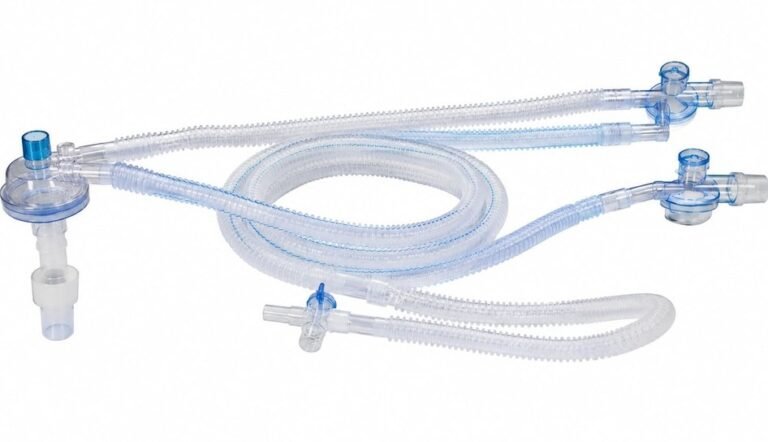
A reusable breathing circuit is just that, like the breathing system that you’ll find in your anaesthesia machine, ventilator or other machine used for administering anesthetics. Instead of being discarded and thrown away at the end of the patient cycling through, a reusable breathing circuit is cleaned, disinfected and otherwise reprocessed between patients, and then is used for multiple cycles.
In use in clinics, these autoclavable breathing circuits will be found in anaesthesia machines, ICUs or ventilators where money and/or speed of moving through patients is the priority concern.
How a Reusable Breathing Circuit Works
Just like any ordinary breathing circuit, except rather than being thrown away, the circuit goes through a validated reprocessing cycle and used again.
From the machine:
Fresh gas flows from the machine into the breathing circuit
Inhale exhale mixed gases
Exhaled gases flow back into the circuit
Dirty carbon dioxide cleaned or handled in the breathing circuit.
Key Features of Reusable Breathing Circuits
1. Autoclavable Materials
Most reusable breathing circuits are made of silicone or other high quality materials that can handle
• High temperature
• High pressure
• Thermal cycling
That’s what makes a breathing circuit autoclavable.
2. Durable Construction
Compared to the disposable version, the reusable breathing circuits are a little thicker so they don’t deform or leak at multiple cycles of use
3. Standardized Design
You’ll generally find reusable systems following standard configurations for anaesthesia machines and ventilators
4. Replaceable Components
Some just go bad, so connectors or even filters can be replaced separately. This may extend the overall lifetime of the circuit.
Advantages of Reusable Breathing Circuits
Lower Long-Term Cost
Operating the service will be cheaper in the long, although the first installation cost is larger. If your institution has a number of users greater or less steady, this represents a great saving.
Environmental Consideration
Fewer breathing circuits shoveled in the medical waste bin instead of thoughtlessly whizzing past in the single-use spinner. This is of rising importance in many markets.
Stable Supply Requirement
Re-use means the hospital is not lay duwn the demand for continuous and constant bulk purchasing and so on to availability with injurious strain.
Challenges and Considerations
Strict Sterilization Requirements
There can’t be half-way measures about it. A reusable breathing circuit has to be washed, disinfected, autoclaved, dried into some material of impediment and stored. Any error in this procedure means much heightened risk of cross infection.
Labor and Equipment Cost
Apart from the obvious cost of sterilizing equipment, this will also means dilutedly recruiting trained persons and so medscopically quality-control procedure. Again one has tp think really well when for disposable breathing circuit to burn and discard.
Performance Degradation Over Time
To exist over many cycles, the autoclavable breathing circuit will become degraded (micro-leaks forming in it, loss of flexibility, etc. headed to more resistance to air flowing to patient). Suitable lateral replacement and pm to pm maintenance must be done regularly.
Comparison
Reusable breathing circuit
More money to start
But cheap of use over time.Costs spread
The process of sterilising the disposable breathing circuit. Requires more time as part of the hospital pathways of work. Greater overall operational complexity.
But lower medical waste.
Disposable breathing circuit
Less initial outlay, but here you are throwing money away continuously – no recycling, no cleaning necessary.
It may not sound a whole lot better in terms of infection control,
But ideal in a high-use environment.
All these things depend on: Hospital pathways of work, how strictly control of infection must be observed, among others.
Common Problems to Watch
Even a well-defined workflow still makes mistakes, and the reusable breathing circuit may be prone to:
Breathing circuit “smoking”, as it’s called leakage after many cycles.
Connector wear or even a mismatch.
Residual moisture affecting the pump and parts of breathing units.
Variable performance of the sterilising or cleaning process.
Reliably testing an autoclavable breathing circuit must include regular “leak tests” and visual inspection under operating conditions at the least.
How to Choose a Reusable Breathing Circuit
Consider your application and the factors above: Anaesthesia – ICU vent and so on. Try to ensure the best sort of material of autoclavable unit; compatible with your instrumentation? How easy to clean and detox? What is the life and replacement cycle? How reliable is the support from the supplier?
And as a distributor, how sure can you put your money in play for the manufacturer? Selling breathing circuits is one aspect, but can he maintain product quality consistency? What is his ability to produce clear technical data to aid engineers?
Conclusion
So a breathing circuit may indeed save you the dollars at the first instant, but that is not all it takes to make the system a winner. Properly managing the routine of cleaning, and control of the whole process, must be weighed. And what about the total warranty for the breathing “circuit” from your supplier. That is why the wise user spends the time selecting scrupulously and checking aurally to be sure he understands and has everything in hand. Statistically, a smart buy is a safe buy.
In the majority of cases, consumers of breathing circuits settle on a mix, some disposable and some of solid construction for long term use. It really does not matter, all things are in a right perspective if they are bringing ambience and safety in to the room. It is not always money we are spending but money to keep we are concerned about.