
Types of Oxygen Delivery Devices

Types of Oxygen Delivery Devices
Introduction to Oxygen Delivery Systems
Oxygen therapy plays an essential role in the management of patients with hypoxemia. However, clinicians must select the delivery interface according to the patient’s actual respiratory needs. The device affects oxygen concentration, flow capacity, patient comfort, and the degree of control over oxygen therapy.
Modern oxygen delivery devices generally fall into four categories: low-flow systems, fixed-performance systems, high-concentration reservoir systems, and high-flow systems. Each category serves a different clinical purpose. Therefore, healthcare professionals should consider oxygen requirements, respiratory pattern, target SpO₂, airway condition, and the risk of hypercapnic respiratory failure before selecting a device.
For hospitals and medical-device procurement teams, understanding the different types of oxygen masks also helps match the product to the intended application. A conventional mask may work well for routine oxygen supplementation. In contrast, patients who require controlled oxygen concentration or high-flow support may need a different system.
Primary Types of Oxygen Delivery Devices & Equipment
1. Nasal Cannula (Oxygen Cannula)
Definition:
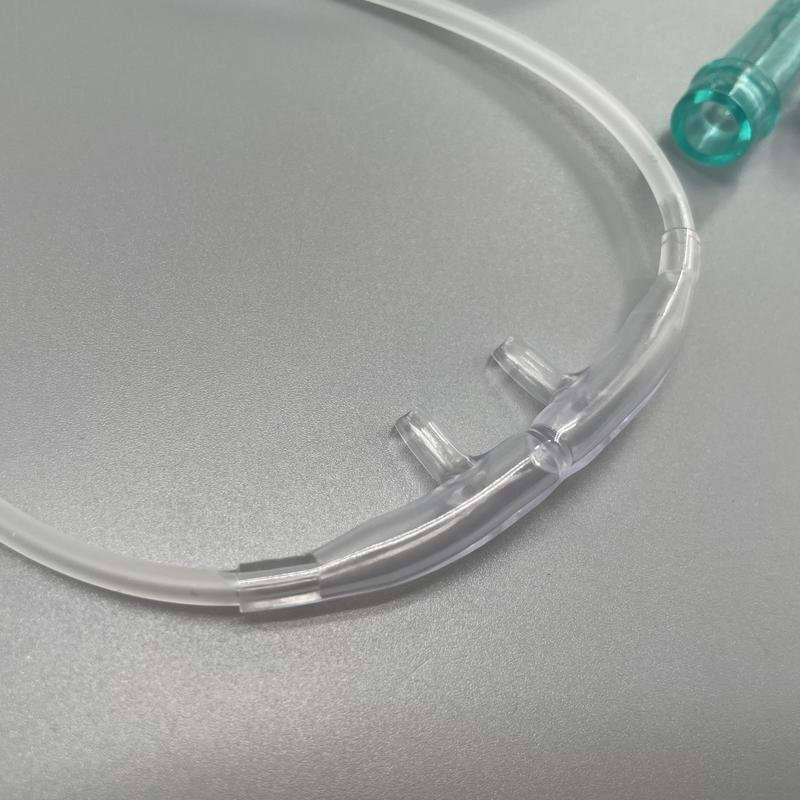
A nasal cannula is a low-flow oxygen interface with two small nasal prongs connected to oxygen tubing.
Working Principle:
The oxygen cannula delivers oxygen continuously through the nasal prongs. The patient then inhales the oxygen through the nose. However, the actual FiO₂ varies according to respiratory rate, tidal volume, inspiratory flow, and mouth breathing.
Typical Parameters:
- Flow: approximately 1–6 L/min
- Approximate FiO₂: 24–44%
- Materials: commonly PVC or other medical-grade flexible polymers
- Interface: nasal prongs with lightweight oxygen tubing
Advantages:
- Comfortable for prolonged use
- Allows the patient to speak, eat, and drink
- Simple to operate
- Suitable for mobile and home oxygen therapy
Limitations:
- Does not provide precisely controlled FiO₂
- Becomes less effective when inspiratory demand increases
- May cause nasal dryness or irritation
Typical Applications:
Clinicians commonly use nasal cannulas for stable patients who need low-to-moderate supplemental oxygen. Typical settings include postoperative care, general hospital wards, emergency departments, and home oxygen therapy.
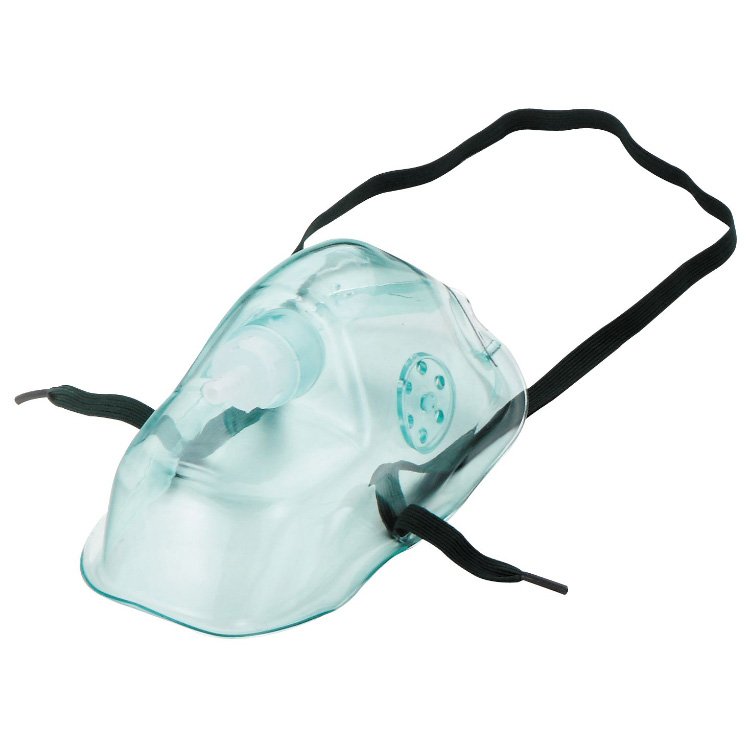
2. Simple Face Mask (Oxygen Simple Mask)
Definition:
An oxygen simple mask covers the patient’s nose and mouth and delivers supplemental oxygen through connected tubing.
Working Principle:
Oxygen enters the mask and mixes with room air during inspiration. As a result, the delivered FiO₂ varies with the patient’s breathing pattern and the fit of the mask.
Typical Parameters:
- Flow: approximately 5–10 L/min
- Approximate FiO₂: 35–60%
- Materials: typically medical-grade PVC or similar polymers
- Configuration: face mask, elastic strap, adjustable nose clip, and oxygen tubing
Clinicians generally use a minimum flow of approximately 5 L/min with a conventional simple mask. This helps reduce the potential for carbon dioxide rebreathing.
Advantages:
- Simple and economical
- Covers both the nose and mouth
- Can provide more supplemental oxygen than a standard nasal cannula
Limitations:
- FiO₂ remains variable
- Interferes with eating and speaking
- May cause discomfort or claustrophobia
- Does not provide precise oxygen concentration control
Typical Applications:
Hospitals commonly use simple masks for short-term oxygen therapy in emergency departments, postoperative areas, and general wards. Consequently, this design represents one of the most common oxygen mask hospital applications.
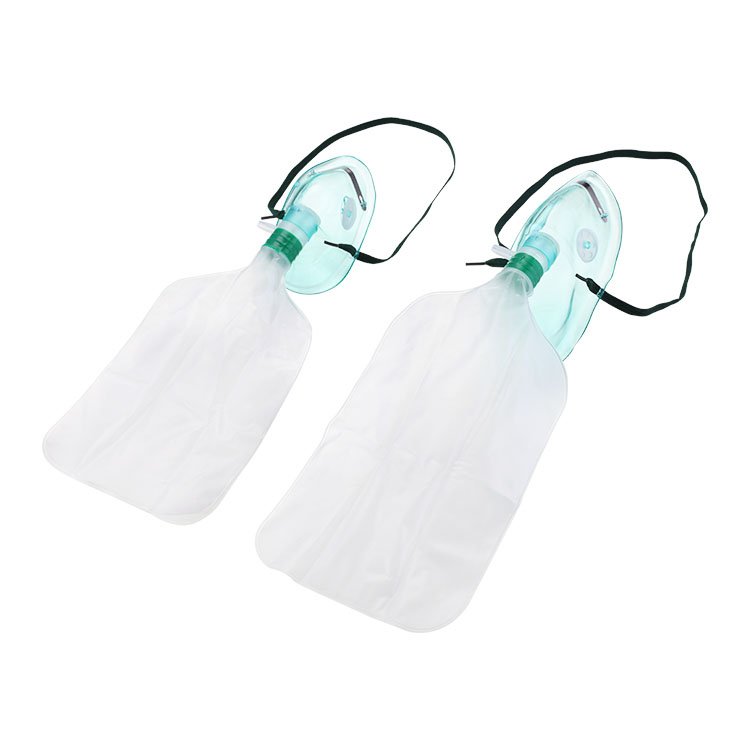
3. Non-Rebreather Mask (O2 Mask Types)
Definition:
A non-rebreather mask (NRB) is a high-concentration oxygen mask that incorporates a reservoir bag and one-way valves.
Working Principle:
The reservoir stores oxygen between breaths. During inspiration, the patient draws oxygen from the reservoir. Meanwhile, one-way valves help limit the entry of room air and reduce rebreathing of exhaled gas.
Typical Parameters:
- Flow: approximately 10–15 L/min
- Potential FiO₂: approximately 60–90% or higher, depending on mask fit, oxygen flow, respiratory pattern, and valve performance
- Materials: typically medical-grade PVC with a reservoir bag
- Key components: face mask, reservoir bag, one-way valves, and oxygen tubing
Advantages:
- Provides a high concentration of supplemental oxygen
- Supports rapid oxygen delivery during acute situations
- Simple to deploy in emergency settings
Limitations:
- Requires sufficient oxygen flow to keep the reservoir inflated
- Does not provide a fixed FiO₂
- Poor mask fit can reduce performance
- Does not provide ventilatory assistance
Typical Applications:
Clinicians may use an NRB during acute hypoxemia, trauma, and emergency stabilization. In these situations, the mask can provide high-concentration oxygen while the clinical team evaluates and treats the underlying condition.
4. Venturi Mask
Definition:
A Venturi mask is a fixed-performance oxygen delivery system that provides a more controlled oxygen concentration than conventional low-flow masks.
Working Principle:
The Venturi effect draws a predetermined amount of room air into the oxygen stream through a calibrated entrainment port. Therefore, different adapters can deliver specific oxygen concentrations.
Typical Parameters:
- Common FiO₂ settings: approximately 24%, 28%, 31%, 35%, 40%, and 60%
- Flow: varies according to the selected Venturi adapter
- Materials: usually medical-grade PVC for the mask and polymer materials for the Venturi valves/adapters
Advantages:
- Provides more predictable FiO₂ than conventional low-flow masks
- Supports controlled oxygen therapy
- Allows clinicians to select different oxygen concentration settings
Limitations:
- Requires the correct adapter
- Clinicians must distinguish oxygen flow from total gas flow
- May not be the preferred option when extremely high oxygen concentrations are immediately required
Typical Applications:
Clinicians often select Venturi masks when they need controlled oxygen therapy. In particular, the device can be useful for patients at risk of hypercapnic respiratory failure, where excessive oxygen administration may cause clinical concerns.
Among the major types of oxygen masks, the Venturi mask stands out because it focuses on controlled oxygen concentration rather than simply delivering the highest possible oxygen level.
5. High-Flow Nasal Cannula (HFNC) & Other Medical Devices
Definition:
High-flow nasal cannula (HFNC) is an advanced oxygen therapy system that delivers heated and humidified gas at high flow rates. The system can meet or exceed the patient’s inspiratory demand in appropriate clinical situations.
Working Principle:
An air-oxygen blender controls the FiO₂. At the same time, a heated humidifier conditions the gas before it reaches the patient through a specialized nasal interface.
Typical Parameters:
- Flow: commonly 20–60 L/min in adults
- FiO₂: approximately 21–100%
- Gas: heated and humidified
- Components: flow generator, air-oxygen blender, humidifier, heated circuit, and nasal cannula
Advantages:
- Provides high and adjustable flow
- Allows clinicians to adjust FiO₂
- Provides heated and humidified gas
- Can generate a degree of positive airway pressure
- Better accommodates patients with high inspiratory demand
Limitations:
- Requires specialized equipment and a power supply
- Costs more than conventional oxygen interfaces
- Requires appropriate monitoring and clinical expertise
Typical Applications:
Clinicians may use HFNC for acute hypoxemic respiratory failure, selected post-extubation patients, and peri-intubation oxygenation. It can also support other clinical situations that require high-flow respiratory support.
In addition, specialized interfaces include tracheostomy oxygen masks and interfaces designed for non-invasive ventilation. Clinicians should select these devices according to airway anatomy, respiratory requirements, and the manufacturer’s validated indications.
Clinical Selection and Safety Considerations
Selecting an oxygen device requires more than choosing a flow rate. Instead, clinicians should assess the patient’s oxygenation, ventilation, airway condition, and response to therapy.
1. Assess Oxygenation
First, measure SpO₂ and assess the patient’s overall clinical condition. Then establish an appropriate target saturation. After changing the device or oxygen flow, reassess the patient’s response.
2. Consider Ventilatory Status
Patients at risk of hypercapnic respiratory failure may require controlled oxygen therapy rather than indiscriminate high-concentration oxygen. Therefore, clinicians should consider blood-gas analysis when the clinical situation requires it.
3. Match the Device to Respiratory Demand
A conventional nasal cannula may work well for modest oxygen requirements. However, it can become inadequate when inspiratory demand increases significantly. In comparison, HFNC can provide substantially greater total gas flow and adjustable FiO₂.
4. Check Equipment Safety
Before and during oxygen therapy, healthcare providers should verify:
- Correct oxygen source and prescribed flow
- Secure tubing connections
- Appropriate mask or cannula fit
- Adequate reservoir inflation with an NRB
- Correct Venturi adapter selection
- Proper humidification with HFNC
- Appropriate clinical monitoring
Furthermore, oxygen supports combustion. Therefore, healthcare facilities must keep smoking, open flames, sparks, and incompatible materials away from oxygen equipment.
For medical-device manufacturers and procurement teams, product specifications should clearly distinguish nominal flow rates from actual patient-delivered FiO₂. Patient breathing patterns, mask leakage, device design, and operating conditions can all affect performance.
For this reason, users should always follow the manufacturer’s instructions for use (IFU), applicable medical-device requirements, institutional protocols, and relevant clinical guidelines.
Porozumění oxygen mask types, types of oxygen masks, o2 mask types, kinds of oxygen mask, and different oxygen masks helps healthcare professionals select an interface according to the patient’s therapeutic requirement. In practice, the best device is not necessarily the one with the highest oxygen output. Instead, it is the device that provides the appropriate oxygen delivery for the patient’s clinical condition.
Weishan Tech’s Oxygen Delivery Solutions
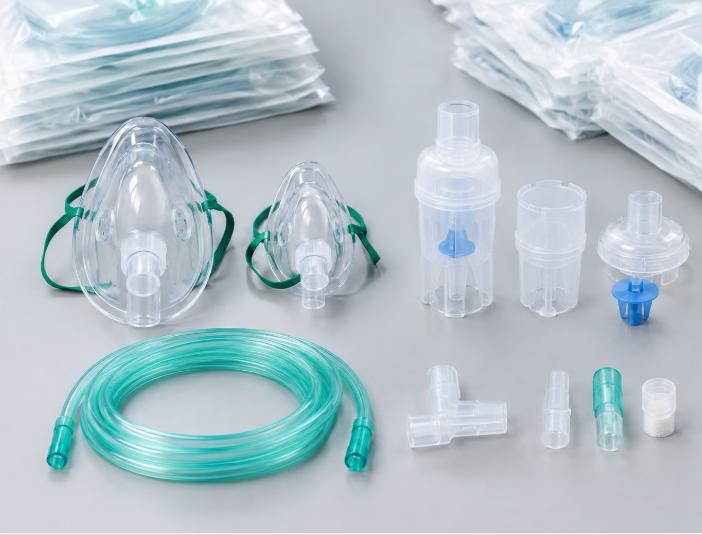
Weishan Tech provides a range of oxygen delivery devices and respiratory care products designed to support reliable oxygen therapy across hospital, clinical, and home-care settings. Our product portfolio includes oxygen masks, nasal oxygen cannulas, oxygen catheters, and oxygen tubing, with a focus on practical performance, patient comfort, and consistent manufacturing quality.
Our oxygen therapy solutions include:
For product specifications, customization requirements, or OEM/ODM cooperation, please contact Weishan Tech.
As a medical respiratory consumables supplier, Weishan Tech works with international healthcare customers and medical device distributors, providing respiratory products for different clinical and care environments. Our manufacturing and quality-control processes are focused on product consistency, functional reliability, and compliance with applicable medical-device requirements.
Často kladené dotazy (FAQ)
The principal categories include nasal cannulas, simple face masks, non-rebreather masks, Venturi masks, and HFNC systems. Each provides a different combination of flow capacity, FiO₂ control, comfort, and clinical application.
A Venturi mask is specifically designed for controlled oxygen concentration. It is generally more predictable than a conventional o2 mask or nasal cannula. For patients requiring high flows together with adjustable FiO₂, HFNC may be more appropriate depending on the clinical situation.