
Medical Nebulizer Masks & Kits: A B2B Procurement Guide for Global Buyers

Medical Nebulizer Masks & Kits: A B2B Procurement Guide for Global Buyers
When hospitals, medical distributors, importers, and private-label brands source a reliable nebulizer system, they quickly discover that success involves much more than simply choosing a mask and a tube. Product configuration, aerosol delivery, material safety, packaging, quality control, and regulatory documentation all actively influence procurement decisions.
Furthermore, a complete nebulizer with mask features a secure patient interface, reliable aerosol delivery, appropriate tubing, and consistent manufacturing quality. For distributors, the chosen supplier must also actively support bulk production, OEM/ODM requirements, private labeling, packaging customization, and market-specific documentation.
This guide outlines the main components of nebulizer systems, highlights common technical distinctions, and details the key factors that international buyers should evaluate when sourcing from a medical device manufacturer.
1. Core Components & Clinical Applications
Nebulizer Masks and Patient Interfaces
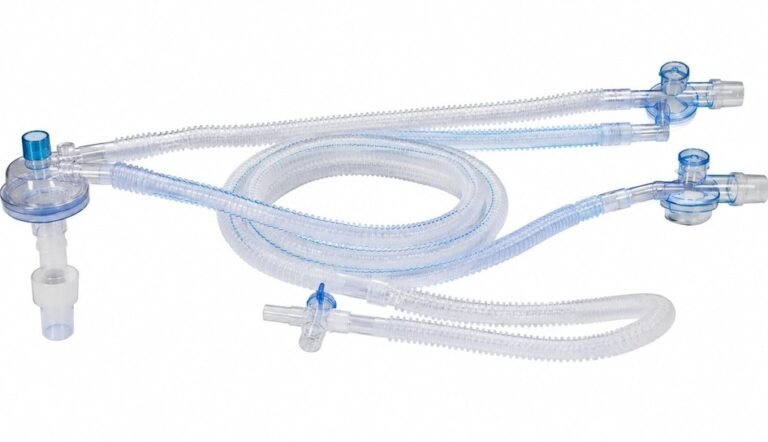
A nebulizer mask delivers aerosolized medication directly through the patient’s respiratory tract. Typically, a standard configuration includes a medication cup, a mask, a connector, and tubing. Depending on the clinical application, the system may arrive as a complete disposable nebulizer kit or as individual components.
Moreover, the mask maintains a stable connection without excessive leakage while maximizing patient comfort. For pediatric applications, a pediatric nebulizer mask and tubing set properly fits smaller facial anatomy and allows easy handling by caregivers or healthcare professionals.
Consequently, buyers evaluating a nebulizer tube and mask configuration examine connector compatibility, tubing flexibility, mask dimensions, material specifications, and packaging conditions rather than focusing on the mask alone.
What Goes Into a Nebulizer?
A frequent procurement question asks what medication in nebulizer systems actually contains. Nebulizers function strictly as delivery devices rather than medications themselves. Depending on the physician’s prescription and the intended clinical application, nebulized formulations typically include specific bronchodilators, corticosteroids, saline solutions, or other prescribed respiratory medications.
Therefore, product manufacturers must avoid making treatment claims that extend beyond the intended use and labeling of the device.
Nebulizer vs. Venturi Mask
Buyers occasionally search what is a venturi mask when they compare various respiratory products. A Venturi mask serves as an oxygen-delivery interface that provides a controlled oxygen concentration using an entrainment principle.
In addition, an adjustable venturi mask utilizes interchangeable or adjustable components to achieve different oxygen concentrations. This system differs fundamentally from a nebulizer: a nebulizer converts liquid medication into an aerosol for inhalation, whereas an oxygen mask primarily delivers oxygen.
This distinction matters greatly when customers ask whether a nebulizer is the same as oxygen. The answer is definitively no. A nebulizer operates as a drug-delivery device, while oxygen therapy delivers supplemental oxygen. Although both devices occasionally function in related respiratory-care environments, their underlying purposes and configurations remain completely different.
2. Complete Systems & Maintenance
Disposable Nebulizer Kits
For hospitals and high-volume healthcare facilities, a disposable nebulizer kit significantly streamlines procurement and infection-control workflows. Typically, a complete kit contains the following elements:
| Component | Procurement Consideration |
| Nebulizer cup | Medication capacity and aerosol performance |
| Nebulizer mask | Fit, comfort, and connector compatibility |
| Tubing | Length, flexibility, and connection security |
| Mouthpiece | Alternative patient interface options |
| Balení | Sterility, labeling, and shelf-life requirements |
Depending on specific applications, buyers can order complete nebulizer and tubing assemblies or specify individual components to match their existing equipment.
Nebulizer Filters
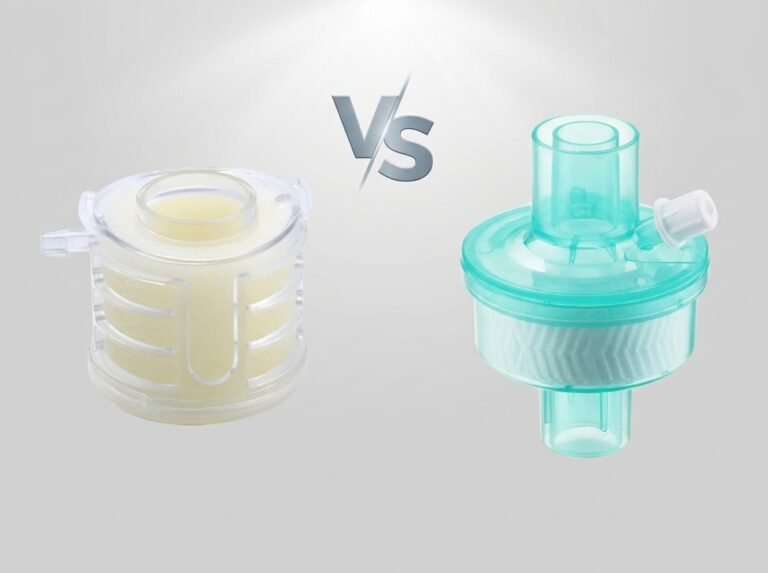
Filters represent another critical consideration, particularly in clinical environments. Buyers searching for a nebulizer machine filter or standard nebulizer filters must first clarify which specific filtration function they require.
Not every nebulizer utilizes the same filter type; filtration requirements depend heavily on equipment design and intended application. Procurement specifications should therefore identify exact device configurations instead of treating all filters as interchangeable.
For reusable equipment, manufacturers and healthcare facilities must follow equipment instructions regarding cleaning, replacement, and maintenance. Furthermore, operators should handle disposable patient-contact components according to intended-use and infection-control guidelines.
3. Technical Clarifications for B2B Buyers
Understanding Nebuliser Mask Parts
When evaluating nebuliser mask parts, international buyers should analyze the entire assembly rather than purchasing components independently. Typically, a complete assembly includes:
- Patient mask
- Medication chamber
- Tubing
- Connector
- Mouthpiece (where applicable)
- Additional caps, valves, or accessories based on design
Compatibility remains vital for distributors managing multiple nebulizer models. Even minor differences in connector dimensions or tubing specifications can impact assembly and usability.
What Does “Hospital Grade” Mean?
Although the phrase hospital grade nebulizer frequently appears in commercial searches, buyers should never rely on the phrase alone. A serious procurement evaluation examines the manufacturer’s quality system, product specifications, risk controls, testing records, traceability, and applicable regulatory documentation.
Specifically, ISO 13485:2016 establishes rigorous requirements for quality management systems used by organizations involved in medical device design and manufacture.
For international sourcing, buyers must also identify destination market requirements. For example, a distributor targeting nebulizer NZ products must consider New Zealand’s import and regulatory standards rather than assuming European or Chinese documentation automatically satisfies local rules.
Likewise, U.S. buyers should verify exact regulatory classifications for specific nebulizer products. FDA records, for instance, classify certain non-ventilatory medicinal nebulizers as Class I devices, whereas other configurations fall under different classifications.
4. Why Partner with Weishan Tech?
For international distributors, partnering directly with a specialized respiratory consumables manufacturer streamlines product development and supply-chain management.
Weishan Tech, headquartered in Taizhou, China, specializes in respiratory and anesthesia consumables, actively supporting B2B customers with product configuration, OEM/ODM development, private labeling, packaging requirements, and bulk production.
Key procurement advantages include:
- OEM/ODM support: Weishan Tech develops product configurations around distributor requirements and target-market specifications.
- Material selection: Clients can specify medical-grade PVC and DEHP-free material options according to product requirements and market regulations.
- Quality management: Documented inspection, process control, traceability, and final quality checks strictly control production.
- Regulatory documentation: Weishan Tech prepares documentation tailored to the intended market and product configuration, helping buyers confirm certificates, declarations, registrations, and test reports.
- Factory-direct supply: Direct communication with the Taizhou manufacturing team eliminates unnecessary supply-chain layers, making customization and production planning straightforward.
For medical device buyers, compliance requires evaluation product by product. While ISO 13485 provides a quality-management framework, market access requirements vary by jurisdiction and product classification.
Závěr
For B2B buyers, a successful nebulizer system functions as a complete medical-device supply solution rather than a simple masker nebulizer or tubing product. Component compatibility, patient-interface design, material safety, quality management, documentation, packaging, and supply capability collectively dictate international procurement success.
Whether your project requires a standard nebulizer mask, a pediatric configuration, a complete disposable kit, or an OEM/ODM private-label solution, collaborating directly with a specialized manufacturer makes product customization and long-term supply management significantly more efficient.
Často kladené otázky
Yes. Weishan Tech actively collaborates with international distributors and medical brands on OEM/ODM configurations, private labeling, customized packaging, and bulk orders. The minimum order quantity (MOQ) depends on the product model, materials, packaging requirements, and customization level. Buyers simply provide their target quantity and specifications so the factory can confirm the applicable MOQ and quotation.
Weishan Tech configures nebulizer components using high-quality medical-grade materials, including medical PVC and DEHP-free PVC options. Quality control covers incoming materials, production processes, dimensional and functional inspection, packaging, and finished-product release. Furthermore, Weishan Tech provides applicable quality and regulatory documentation, while clients confirm CE and other market-specific requirements based on their exact destination market.
Weishan Tech supports customized packaging and international shipping arrangements, including standard FOB and CIF terms. Lead times depend on product availability, order quantity, packaging customization, and production scheduling. To ensure accurate planning, distributors should confirm required quantities, destination ports, packaging specifications, and target delivery dates before placing an order.