
5 Critical Quality Checkpoints for Sourcing Coaxial Breathing Circuits

5 Quality Checkpoints When Sourcing Coaxial Breathing Circuits from China
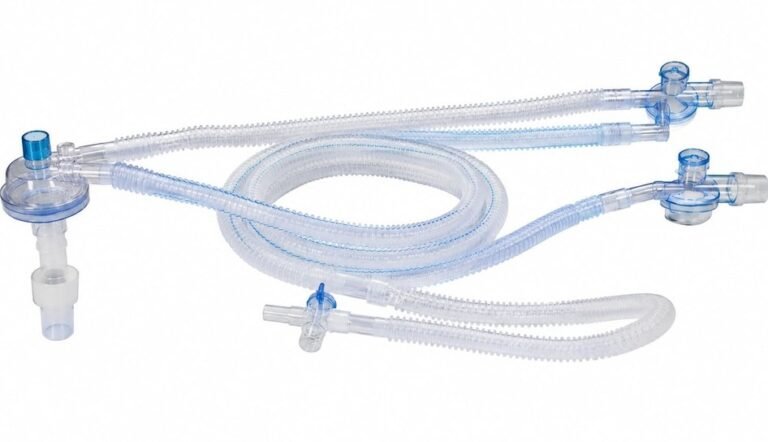
breathing circuits are more complex than regular circuits. This makes it hard to find quality issues. The tube-inside-a-tube design means everything can look fine outside but the inner tube can still be broken.
Here are 5 inspection priorities from years of export experience. Procurement teams can use this checklist during factory audits or incoming quality inspections to catch the critical risks.
1.Inner Tube Fixation and Kink Resistance
The inner tube is very important in a circuit. If it slips or kinks during surgery bad air cannot be removed properly. This can lead to carbon dioxide rebreathing, which’s very dangerous.
How to inspect: first check how the inner tube is secured at the connector. It can be bonded, clipped or heat-welded. Different methods have reliability levels. Second perform a pull test by gripping the tube at the connector and pulling firmly to check for detachment. Third bend the tube body at 90 degrees hold for 30 seconds then release and check whether the inner tube has collapsed or deformed.
A good factory will have a kink-resistance testing protocol and can provide test reports. If the factory says “we haven’t done that test ” that’s a problem.
2.Connector Precision and Real-World Fit Testing
Breathing circuit connectors must follow the ISO 5356-1 standard.. Coaxial circuit connectors are more complex than regular ones. They need to fit with the inner tube pathway. This demands mold precision.
Measuring dimensions alone is not enough. Always test-fit with anesthesia machine ports and Y-piece connectors. Check whether insertion and removal are smooth whether the connection is secure without play and whether the seal holds under pressure. Some factories produce connectors that technically fall within tolerance ranges but feel too tight or too loose on equipment. Only hands-on testing reveals these issues with breathing circuits.
3.Tube Wall Transparency
During use healthcare staff need to see the circuit for condensation buildup, secretion blockages or foreign objects. Poor tube wall transparency makes it hard for the clinician to see. Creating a safety hazard with coaxial breathing circuits.
A quality coaxial circuit should have an outer tube with the inner tube clearly visible inside. During inspection hold the tube against a source. The inner tube contour should be immediately visible. If the outer tube appears foggy yellowed or has light transmission the raw material quality is bad.
4.Regulatory Documentation Verification
CE certification, FDA 510(k) registration and ISO 13485 system certification are the basics. For circuits pay extra attention to two reports: a biocompatibility test report confirming the materials are safe for the human body; and an EO sterilization residual report, confirming ethylene oxide residuals are within safe limits for coaxial breathing circuits.
Don’t just glance at these documents. Verify the certificate numbers, product scope and expiration dates. When necessary, cross-check on the certification body’s website.
5. Packaging Design and Transit Protection
Coaxial circuit tubing is usually 1.5 to 1.8 meters long. Without protection inside the shipping carton tubes can easily be compressed and deformed during shipping. Once the tube body is deformed the inner tube structure may be compromised. Rendering the breathing circuit product unusable.
When checking packaging focus on: whether individual bags allow the tubing to curve naturally than being force-folded; whether the outer carton has dividers or cushioning; and whether stacking tests have been performed. Reliable factories don’t cut costs on packaging because they know the after-sales cost of transit damage far exceeds a few cents spent on better packaging, for coaxial breathing circuits.