
What Is a Breathing Circuit and How Does It Work

Breathing Circuit Meaning and Use
What is breathing circuit? Breathing circuit is the passage for oxygen and anesthetic gas to the patient, and for the removal of carbon dioxide from breathing.
It is part of anesthesia machines, ventilators and critical care use.
Simply, when someone asks “what is breathing circuit?” refer to this whole system of tubes and connectors that guides air into and out of the patient in as safe a manner as possible.
Breathing Circuit Function
The function of breathing circuit is essentially to allow breathing in and out. In more detail,
The main breathing circuit function is to deliver gas to the patient.
Allow exhaled gases to leave.
Remove and/or filter carbon dioxide.
Retain sufficient humidity and temperature.
Breathing circuits must function well for long periods in anesthesia and ventilation. Even tiny things like leakage and resistance impact performance and patient safety.
Main Components of Breathing Circuit
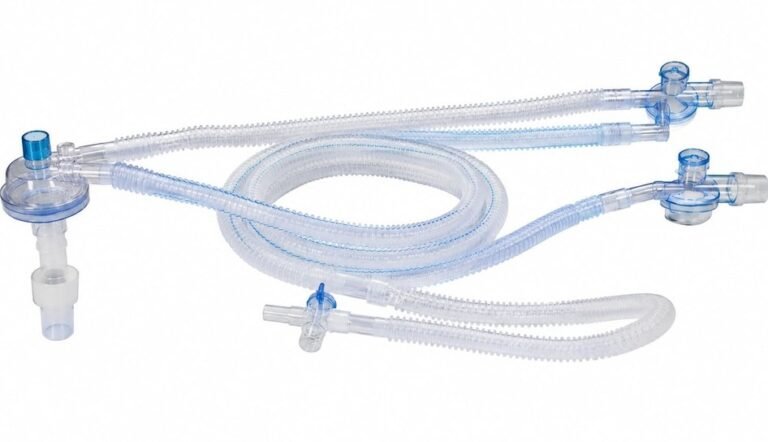
A common breathing circuit is made of:
1. Tubing
The main pathway for gas is, in general:
a. Corrugated breathing circuit (flexible, most common).
b. Smoothbore breathing circuit (less resistance to flow, clears more smoothly).
2. Connectors
Whether this is not a clinicalPoor connections account for one of the highest rates of breathing circuit leakage.
3. Y-piece
The Y-piece forms the connection between the inspiratory limb and the expiratory limb of the circuit and is responsible for routing airflow during inspiration and expiration.
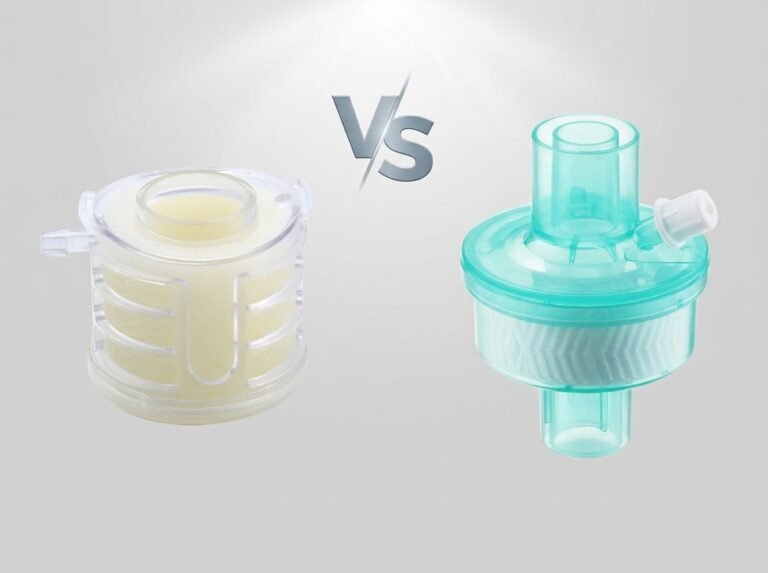
4. Filters (HME / HMEF)
Many breathing circuit systems have a HME filter or HMEF filter component.
HME (Moisture Exchange) filter serves to hold moisture and heat, while HMEF filter adds a filtration function to HME, serving to block microorganisms and viruses. As these hazards are greatly reduced, patient safety is improved, and risk of permutation is reduced.
5. Humidifier Chamber (Optional)
Sometimes the HME filter is replaced with a humidifier chamber that actively adds moisture to the air that is being delivered to the patient. Most of this used for long term ventilation therapy using a ventilator.
How Breathing Circuits Work
The process by which breathing circuits “do their thing” is pretty straightforward
The machine pumps fresh gas into the breathing circuit
The gas passes through the circuit tubing to reach the patient
The patient inhales the fresh gas mixture
Exhaled gas travels along the breathing circuit path
Carbon dioxide is removed or filtered with the entire cycle repeating indefinitely or during the period of need.
Types of Breathing Circuits
A few designs fulfill different needs. They include:
Disposable Breathing Circuit
This circuit is designed for single use only. This significantly reduces the possibility of cross infection and that is why disposable breathing circuits are favored in hospitals.
Reusable Breathing Circuit
These breathing circuits can be reused after they have been sterilized. Although the disposable breathing circuits might be a bit cheaper on price, the reusable version has a lower overall price. However, there are risks of cross infection if hygiene is not strictly controlled.
Pediatric Breathing Circuit
These breathing circuits are characterized to be smaller to suit babies and smaller patients of all ages. However, the pediatric breathing circuits work to minimize dead space and resistances. The adult version does exactly the opposite, making adequate provision for the size of adult patients, including those who might require high volume ventilation.
Weighing Your Options
The breathing circuit selection is very critical as that will determine how the whole machine ultimately performs.
Why Breathing Circuit Quality Earns Its Value
For distributors and hospitals, the performance of breathing circuits would surely, sooner or later, be yielding outcomes that must go down as losses, not wins.
Among the common problems users face with a breathing circuit are:
Breathing circuit leaking
Inconsistent material quality
Connector mismatch
Packaging damage
These lead to return, complaint, and adverse effect on the bottom line.
A reliable breathing circuit supplier of manufacturer will make sure the production consistently meets desired standards from one batch to another. There should be leak testing, and thorough batch inspection procedures so specifications don’t fluctuate with every shipment.
How to Choose a Breathing Circuit
When picking out a breathing circuit, you will-have in mind;
The application—whether anesthesia, ICU, emergency care;
Type of patient, i.e. pediatric or adult;
Whether you will use corrugated breathing circuit, or a simple smoothbore;
The circuit type, i.e. need for a filter (HME or HMEF);
Disposable or reusable;
Price and MOQ.
Performance and qualitative factors can vary with cost, so you will give them great consideration especially if you are planning to buy a lot at once.
Conclusion
Knowing what exactly is breathing circuit and what it performs or over the is essential to anyone who enters medical supplies distribution.
As you can see, a breathing circuit is hardly just some plastic tubings; it’s a whole system strategically designed to ensure that any ventilation being done is safe and delivered without accident.
Keeping it cheap without compromising on price could be tricky for high volume products like breathing circuits where consistency and overall product quality matter as much as price.
Keeping down the cost won’t be enough if you cannot pay for the best product, so finding the right breathing circuit manufacturer should be the aim in the first place.