
How breathing circuits and filtration design reduce cross-infection

Engineering Perspective — Medical Device Manufacturer
How Breathing Circuits &
Filtration Design Reduce
Cross-Infection
Engineering Strategies for Safer Respiratory Care Systems
01
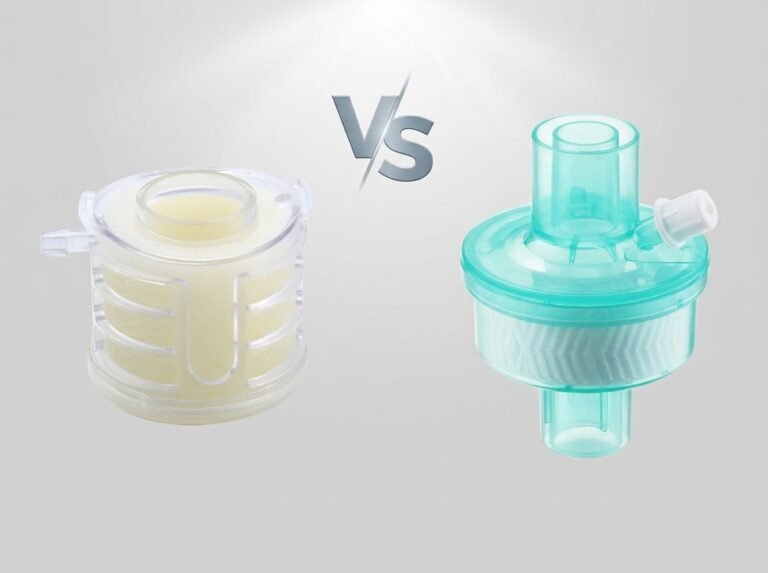
High-Efficiency Filtration Against Cross-Contamination
BFE/VFE performance >99.99% helps block airborne pathogens and aerosolized contaminants.
Hydrophobic membrane structures reduce moisture penetration and bacterial migration.
Integrated respiratory filters minimize bidirectional cross-contamination risks between patient and ventilator systems.
Pathogen
Blocked
Blocked
Moisture
Repelled
Repelled
Bidirectional
Protection
Protection
HEPA-Grade
Membrane
Membrane
02
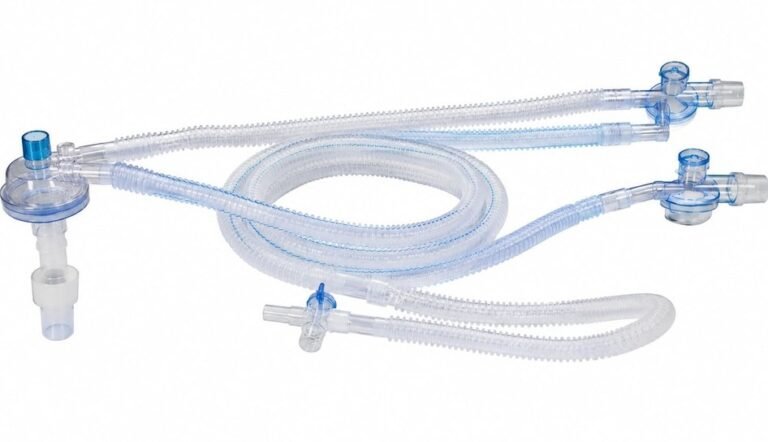
Optimized Circuit Geometry Reduces Moisture Accumulation
VS
CORRUGATED TUBING
SMOOTH-BORE TUBING
Smooth-bore tubing improves airflow efficiency while reducing secretion retention.
Low-condensation circuit design helps minimize microbial growth in humid environments.
Controlled water drainage pathways lower the risk of contaminated condensate backflow.
03
Precision Sealing Through ISO 5356 Standard Interfaces
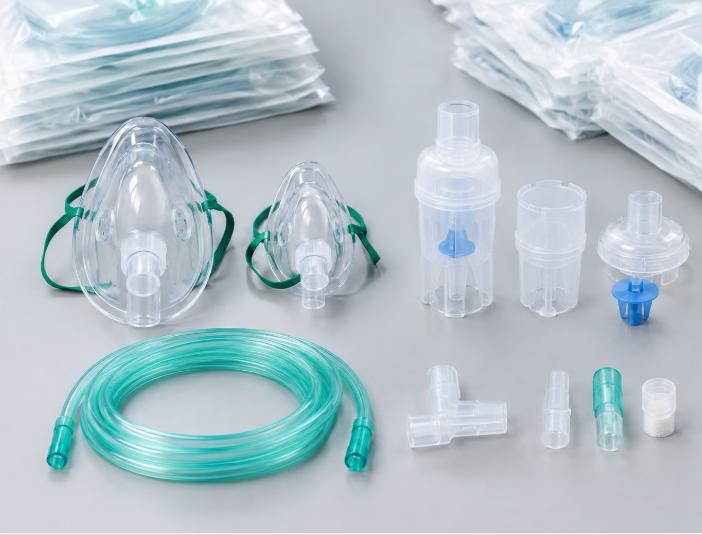
ISO 5356 compliant connectors improve compatibility across respiratory devices.
Leak-resistant interfaces help maintain closed-system ventilation integrity.
Secure fitting structures reduce accidental disconnections and environmental exposure risks.
Leak
Prevention
Prevention
ISO 5356
Certified
Certified
Closed-Circuit
Airflow
Airflow