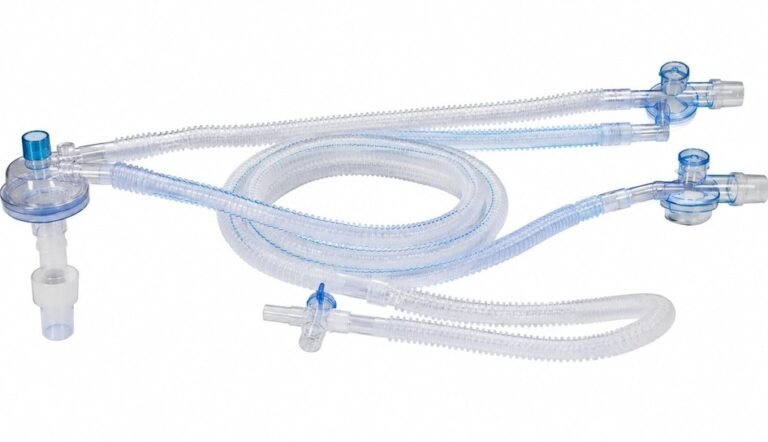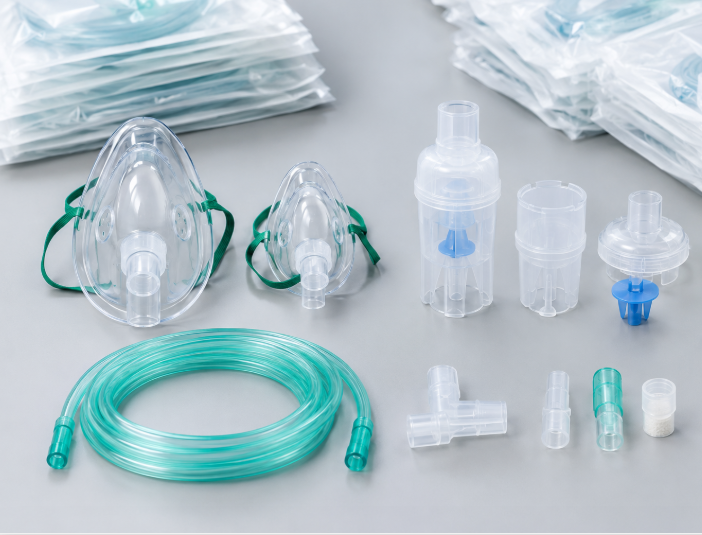

HME vs. HMEF Sourcing Guide: Technical Differences, Compliance, and Usage Standards for Medical Distributors

HME vs. HMEF Sourcing Guide: Technical Differences, Compliance, and Usage Standards for Medical Distributors
Key Takeaways for Sourcing Managers
For medical device distributors, importers, and hospital procurement teams, understanding the differences between a heat moisture exchanger (HME) and a heat and moisture exchange filter (HMEF) is essential for building a competitive respiratory consumables portfolio.
- HME: Primarily designed to conserve heat and moisture from exhaled breath and return them during subsequent inhalation.
- HMEF: Combines heat and moisture exchange with a bacterial and viral filtration function, subject to the product’s validated performance specifications.
- Sourcing priority: Compare moisture output, filtration efficiency, airflow resistance, internal volume (dead space), connector compatibility, and intended use—not just unit price.
- Compliance priority: Verify the manufacturer’s quality management system, applicable market authorizations, technical documentation, labeling, and validated replacement instructions.
- OEM opportunity: Qualified manufacturers can support private-label products, customized packaging, and portfolio expansion through OEM contract manufacturing medical devices.
The key commercial consideration is to match product specifications to customer requirements while maintaining consistent quality, reliable supply, and market-specific regulatory compliance.
1. HME vs. HMEF:Understanding the Product Portfolio
What is a Heat Moisture Exchanger (HME)?
A heat moisture exchanger is a respiratory consumable that captures heat and moisture from exhaled gas and returns part of that heat and moisture to the inhaled gas. It helps provide passive humidification in compatible respiratory applications.
From a product catalog perspective, HMEs are generally positioned as humidification-focused devices. Depending on their design and labeling, they may be used in compatible ventilator circuits or other specified respiratory configurations.
Typical buyer considerations include:
- Moisture output and humidification performance.
- Internal volume and airflow resistance.
- Patient connection and circuit compatibility.
- Intended patient population and duration of use.
- Packaging configuration and unit cost.
What is a Heat and Moisture Exchange Filter (HMEF)?
A heat and moisture exchange filter combines passive humidification with a filtration function intended to reduce the passage of specified microorganisms through the device.
For procurement teams, an HMEF adds a filtration-performance requirement to the basic humidification assessment. Buyers must review validated bacterial and viral filtration claims, pressure drop, moisture output, and other specifications together.
HMEFs may be specified for compatible anesthesia and respiratory circuits where filtration is required by the applicable clinical protocol and device labeling. They should not automatically be considered interchangeable with every HME or breathing-system filter.
Why both categories matter to distributors
Hospitals, anesthesia departments, and respiratory equipment suppliers have different requirements depending on their equipment, infection-control policies, and intended applications.
Offering both HME and HMEF options allows distributors to serve different procurement specifications without relying on one product configuration for every application. However, product selection must follow the intended use and technical requirements rather than assuming that every HMEF is suitable for every circuit or patient.
2. Technical Comparison & Product Specifications for Importers
When comparing HME and HMEF products, procurement teams should assess performance data under comparable test conditions. Product names alone do not establish filtration capability, humidification performance, or compatibility.
| Sourcing criterion | HME | HMEF |
|---|---|---|
| Primary function | Heat and moisture exchange | Heat and moisture exchange plus filtration |
| Filter media | May use moisture-retaining media; filtration varies by design | Electrostatic or mechanical filtration media, depending on model |
| Bacterial filtration efficiency (BFE) | Verify product-specific claims | Verify validated BFE data |
| Viral filtration efficiency (VFE) | Verify product-specific claims | Verify validated VFE data |
| Moisture output | Assess against intended application | Assess alongside filtration performance |
| Dead space | Check internal volume in mL | Check internal volume in mL |
| Airflow resistance | Review pressure drop at specified flow rates | Review pressure drop at specified flow rates |
| Typical applications | Compatible respiratory circuits requiring passive humidification | Compatible respiratory or anesthesia circuits requiring humidification and filtration |
| Target hospital units | Respiratory care, ICU, anesthesia, as applicable | ICU, anesthesia, respiratory care, as applicable |
Important: BFE and VFE are not interchangeable measurements. Request the test methods, test conditions, and supporting reports behind each claim. Do not assume that all HMEFs provide identical protection or that an HME has no filtration capability.
Before approving a supplier, request a technical specification sheet covering:
- Moisture output and test method.
- Internal volume and resistance to flow.
- Bacterial and viral filtration efficiency, where claimed.
- Connector dimensions and configuration.
- Recommended patient population and intended use.
- Packaging, shelf life, traceability, and replacement instructions.
These details help importers compare like-for-like products, assess tender requirements, and avoid selecting a lower-priced device that fails the customer’s technical specification.
3. Product Guidelines & Risk Management: How Long Can HME and HMEF Filters Be Used?
Practical sourcing answer: Many disposable HME and HMEF products intended for respiratory circuits specify replacement at least every 24 hours during continuous use. However, 24 hours is not a universal rule for every product or application. The exact replacement interval must follow the manufacturer’s validated instructions for use (IFU) and applicable clinical protocols.

INDICATION FOR USE STATEMENT
+2
Importers should ensure that product labeling clearly addresses:
- Single-patient use: Whether the device is intended for one patient only and whether reuse is prohibited.
- Replacement interval: The maximum duration specified by the manufacturer for the intended application.
- Immediate replacement conditions: Visible contamination, secretion buildup, obstruction, increased resistance, damage, or malfunction, as applicable to the IFU.
- Compatibility and precautions: Approved circuit configurations, contraindications, and restrictions on use with active humidification or nebulization.
A device that becomes contaminated or obstructed may require replacement before its stated time limit. Clinical staff must follow local hospital protocols and the manufacturer’s instructions rather than treating the time limit as permission to continue using a compromised device.
For distributors, accurate labeling is a quality and liability issue. Missing or ambiguous instructions can create uncertainty for customers and increase the risk of complaints, misuse, and product recalls.
Before shipment, verify that the IFU, product label, packaging, and technical documentation consistently communicate the approved intended use and replacement requirements. Retain the relevant document versions and ensure that customer-facing claims match the evidence supplied by the manufacturer.
4. OEM & Contract Manufacturing: Partnering for Global Distribution
For distributors developing their own respiratory consumables brand, OEM contract manufacturing medical devices offers a route to expand product portfolios without establishing an independent manufacturing facility.
A qualified OEM partner can support product configuration, technical documentation, private-label packaging, and production planning. The scope of support depends on the manufacturer’s capabilities and the regulatory requirements of the destination market.
What should buyers evaluate in an OEM partner?
1. Quality management and manufacturing controls
Verify the manufacturer’s ISO 13485 certification, its validity and scope, and whether the certified activities cover the products being sourced. Review relevant manufacturing controls, cleanliness requirements, incoming material inspection, production traceability, and final product testing.
Do not assume that every HME or HMEF requires the same cleanroom classification. Manufacturing environment requirements should be established according to the device design, production process, and applicable standards.
2. Product customization and engineering
Discuss the following requirements before requesting a quotation:
- Standard 15 mm and 22 mm connectors, including the required male/female configuration.
- Low-dead-space designs appropriate for the intended patient population.
- Airflow resistance and moisture output targets.
- Electrostatic or mechanical filtration options, where applicable.
- Sampling ports, packaging formats, and product identification requirements.
3. Regulatory documentation and market access
For European distribution, verify applicable EU MDR requirements, conformity assessment obligations, and CE-marking status. For the United States, confirm the device’s classification, applicable FDA requirements, and relevant establishment registration, listing, or premarket authorization obligations.
FDA registration or listing alone does not establish that a device is FDA-approved or cleared. Likewise, a manufacturer’s statement of “CE readiness” is not equivalent to demonstrated conformity or permission to market a product.
4. Private-label packaging and supply reliability
Request samples and review packaging artwork, labeling languages, lot identification, expiry-date presentation, storage conditions, and shipping carton specifications. Confirm minimum order quantities (MOQs), production lead times, quality agreements, complaint handling, change control, and continuity of supply.
An effective OEM relationship should combine technical consistency with predictable delivery and documented quality responsibilities.
5. Conclusion: Building a Competitive HME/HMEF Portfolio
HME and HMEF products serve related but distinct purchasing needs. HMEs primarily address passive humidification, while HMEFs combine humidification with a specified filtration function. For medical distributors and hospital procurement teams, the right sourcing decision depends on verified performance, intended use, compatibility, regulatory documentation, and total supply-chain reliability.
Whether you are expanding an existing respiratory consumables catalog or launching a private-label product line, a structured technical evaluation can help reduce sourcing risks and improve product selection.
Looking for an HME/HMEF manufacturing partner?
Medical importers, distributors, OEM partners, and hospital supply-chain buyers are invited to request:
- Bulk product samples for technical evaluation.
- Detailed specifications and filtration test documentation.
- Manufacturing and quality-management information.
- Private-label packaging options.
- OEM/ODM quotations based on product requirements and estimated order volumes.
Contact your prospective manufacturing partner with your target market, required specifications, expected annual demand, and regulatory documentation requirements to begin a focused sourcing discussion.