
LMA vs. ETT: Connection, Clinical Differences

LMA vs. ETT: Connection, Clinical Differences
Airway management is one of the most important parts of anesthesia and critical care. A reliable airway device must do more than simply deliver oxygen. It must provide an appropriate connection between the patient and the breathing system while maintaining adequate ventilation and, when required, protecting the airway from aspiration.
Two devices are frequently discussed in this context: the laryngeal mask airway (LMA) and the endotracheal tube (ETT).
Although both can be connected to an anesthesia breathing circuit or ventilation system, they are fundamentally different devices. Their anatomical position, sealing mechanism, clinical indications, and level of airway protection are not the same.
For hospitals, distributors, and medical device purchasers, understanding these differences is important not only for clinical selection but also for evaluating the quality and compatibility of respiratory consumables.
What Are LMA and ETT?
What Is an LMA?
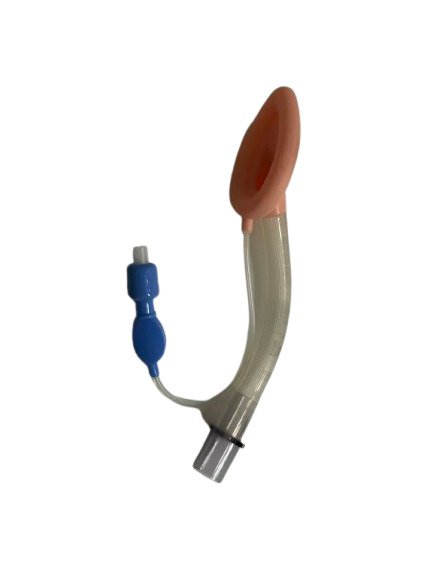
A laryngeal mask airway (LMA) is a supraglottic airway device. Instead of passing through the vocal cords into the trachea, the LMA is positioned above the glottis, with its mask designed to form a seal around the laryngeal inlet.
The LMA provides a relatively unobstructed pathway between the breathing circuit and the patient’s airway.
Depending on the design, an LMA may include:
An airway tube,An inflatable or non-inflatable cuff,A mask-shaped distal portion,A standard connector for the breathing circuit,In some designs, a gastric drainage channel.
Because the device remains above the vocal cords, placement is generally less invasive than tracheal intubation.
What Is an ETT?
An endotracheal tube, commonly abbreviated as ETT, is inserted through the mouth or nose and advanced through the vocal cords into the trachea.
The tube creates a direct artificial airway between the ventilation system and the lower respiratory tract.
A conventional cuffed ETT normally consists of:
A flexible tube,A distal cuff,An inflation line,A pilot balloon,A standard proximal connector,A distal bevel and, depending on the design, a Murphy eye
The cuff is inflated after placement to help establish a seal within the trachea.
In clinical communication, you may also encounter terms such as tube ET, ET tube, or e t tube intubation. These expressions generally refer to the same broad concept of endotracheal tube placement, although terminology can vary between hospitals and regions.
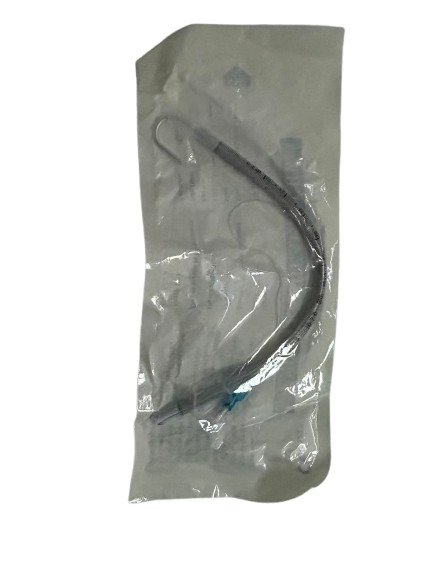
LMA and ETT: How Are They Connected to a Breathing System?
At first glance, one of the similarities between an LMA and an ETT is their connection to respiratory equipment.
Both devices typically use a standardized proximal connector that can connect to components such as:
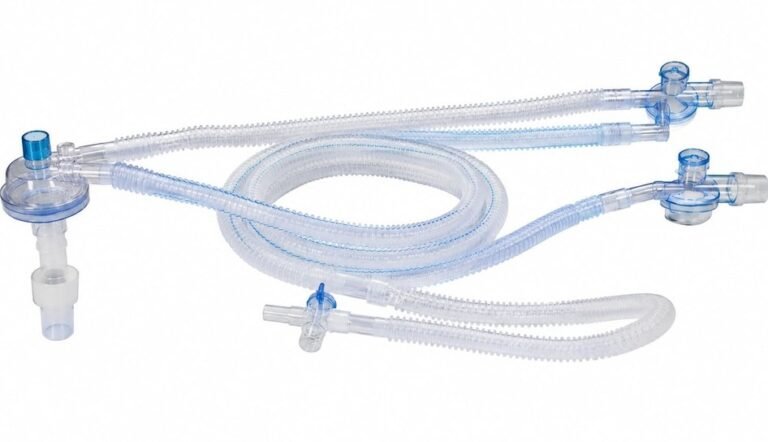
Anesthesia breathing circuits
Ventilator tubing
Breathing filters
Heat and moisture exchange devices
Other compatible airway accessories
However, the fact that both devices can connect to the same breathing circuit does not mean that they provide the same type of airway management.
The major difference occurs at the patient end.
With an LMA, the airway interface is located above the vocal cords.
With an ETT, the tube passes through the glottis and terminates inside the trachea.
This anatomical difference determines much of their clinical behavior.
LMA vs. ETT: The Key Clinical Differences
1. Anatomical Position
The most fundamental difference is where the device is positioned.
LMA: Supraglottic
The LMA sits around the laryngeal inlet without entering the trachea.
ETT: Intratracheal
The ETT passes through the vocal cords and terminates in the trachea.
This distinction is critical because an ETT provides a more direct and controlled airway pathway.
2. Airway Protection
Airway protection is one of the most important differences between an LMA and an ETT.
A properly positioned cuffed ETT can provide a seal within the trachea and is generally preferred when a higher level of airway protection is required.
An LMA forms a seal around the laryngeal inlet rather than sealing the trachea itself.
Therefore, an LMA should not automatically be considered equivalent to an ETT for preventing pulmonary aspiration.
Patient selection is particularly important when there is a significant risk of regurgitation or aspiration. Clinical references emphasize that inappropriate use of an LMA in patients with high aspiration risk can lead to inadequate ventilation or aspiration-related complications.
3. Insertion and Airway Manipulation
An LMA generally requires less manipulation of the airway structures than conventional endotracheal intubation.
ETT placement requires visualization or other techniques to guide the tube through the vocal cords and into the trachea.
For this reason, ETT intubation can produce greater stimulation of the airway.
Clinical studies have reported higher incidences of postoperative coughing, hoarseness, and sore throat in some patient populations following ETT use compared with LMA use.
However, this does not mean that an LMA is always clinically preferable.
The appropriate choice depends on the patient’s condition, procedure, aspiration risk, ventilation requirements, and the clinician’s assessment.
LMA vs. ETT: Comfort and Postoperative Effects
For selected patients undergoing general anesthesia, one potential advantage of an LMA is reduced airway stimulation.
Because the device does not pass through the vocal cords, it may be associated with less postoperative airway irritation.
A systematic review and meta-analysis comparing flexible LMAs with ETTs found lower incidences of postoperative hoarseness and coughing in the LMA group. However, the same analysis also found a higher incidence of partial upper-airway obstruction with LMA use.
This illustrates an important principle:
A lower rate of one type of airway complication does not mean that one device is universally safer than the other.
Different devices create different risk profiles.
For manufacturers and healthcare purchasers, this is why product specifications should be evaluated together with the intended clinical application rather than focusing on a single feature.
Ventilation Performance and Airway Seal
The quality of the airway seal directly influences the effectiveness of positive-pressure ventilation.
An ETT, when correctly positioned and appropriately sized, creates a controlled airway pathway inside the trachea. This makes it particularly useful when controlled ventilation is required over a prolonged period or when airway protection is a major concern.
Modern LMA designs have also improved airway sealing performance.
Some advanced LMA products incorporate features such as:
Higher-performance cuff designs
Gastric access channels
Reinforced airway tubes
Improved anatomical curvature
Reduced cuff pressure
Enhanced resistance to kinking
These design differences are important when comparing products from different manufacturers.
For medical device buyers, an LMA should not be evaluated solely by its appearance or basic dimensions. Cuff performance, material consistency, connector reliability, airway tube flexibility, and manufacturing tolerances can all affect clinical usability.
LMA vs. ETT: Typical Clinical Applications
When an LMA May Be Appropriate
An LMA may be considered for appropriately selected patients undergoing procedures where a supraglottic airway is clinically suitable.
Common applications may include:
General anesthesia for selected surgical procedures
Shorter procedures
Situations where tracheal intubation is not required
Selected emergency airway management situations
Airway management when intubation is difficult or delayed
The LMA can also serve as an important rescue or bridging airway in certain difficult-airway situations.
However, patient selection remains essential.
When an ETT Is Generally Preferred
An endotracheal tube is commonly selected when clinicians require a more secure and controlled airway.
Examples may include:
Procedures with significant aspiration concerns
Prolonged mechanical ventilation
Critical care
Situations requiring controlled ventilation
Certain thoracic or airway procedures
Operations where access to the airway or surgical positioning makes a secure tracheal airway particularly important
The decision should always be made by appropriately trained clinicians according to the patient’s clinical condition and the requirements of the procedure.
LMA vs. ETT: A Practical Comparison
| Feature | LMA | ETT |
| Anatomical position | Above the glottis | Inside the trachea |
| Airway type | Supraglottic | Intratracheal |
| Vocal cord passage | No | Yes |
| Insertion | Generally less invasive | More invasive |
| Airway protection | Limited compared with ETT | Higher level of airway protection |
| Typical use | Selected anesthesia and airway management | General anesthesia, critical care and controlled ventilation |
| Airway stimulation | Generally lower | Generally higher |
| Intubation required | No | Yes |
| Aspiration-risk patients | Generally not preferred | Often preferred |
| Long-term ventilation | Limited/clinical-context dependent | Commonly used |
| Connection to breathing circuit | Standard connector | Standard connector |
The most important point is that LMA and ETT are complementary airway devices rather than direct substitutes.
The final decision should always be based on clinical assessment rather than choosing an airway device simply because it is easier to insert or more comfortable after surgery.
No. An LMA is a supraglottic airway device positioned above the vocal cords, while an endotracheal tube passes through the vocal cords and into the trachea. Both can connect to an anesthesia machine or breathing circuit, but they provide different levels of airway control and protection.
Neither device is universally better. An ETT is generally preferred when a more secure tracheal airway, controlled ventilation, or greater airway protection is required. An LMA may be appropriate for selected patients and procedures where tracheal intubation is not necessary. The choice should be made according to the patient’s condition and clinical requirements.
Yes. Standard LMA designs typically include a proximal connector that allows connection to compatible anesthesia breathing circuits and ventilation equipment. However, compatibility should always be confirmed according to the device specifications and the relevant respiratory equipment.