
Medical Respiratory Filter Explained

Medical Respiratory Filter Explained
The respiratory filter that clinicians nowadays depend on within their respiratory care delivery armamentarium is, at first glance, insignificant and small, yet plays an essential role in patient safety and tropical infection control in ICU ventilators, anesthesia, and transport ventilation.
Distributors, OEM buyers, and hospitals will now learn to appreciate the role of the respiratory filter and know how to choose the most to make the greatest impact on clinical results and long-term costs.
What is a Respiratory Filter used in the Medical Setting?
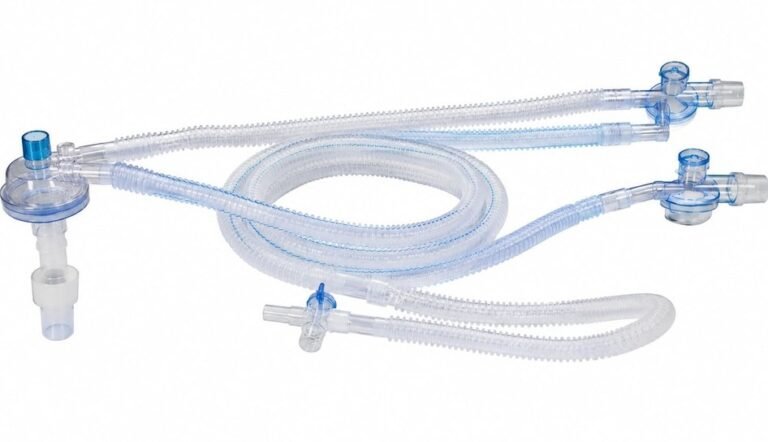
A respiratory filter medical device is integrated into a breathing circuit where it aids in preventing the passage of bacteria, viruses, and particles of material from patient to ventilator.
In use, it achieves three main objectives:
- Protects the patient from contaminated airflow.
- Protects the ventilator/anesthesia machine.
- Limits cross-infection from patient to patient, and from equipment, to patient.
Commonly found:
- Between patient airway, ie endotracheal tube, and circuit, on inspiratory or expiratory limbs of the breathing circuit?
Types of Respiratory Filters
Different clinical settings demand different specialist filters for use. The most common respiratory filter medical products are:
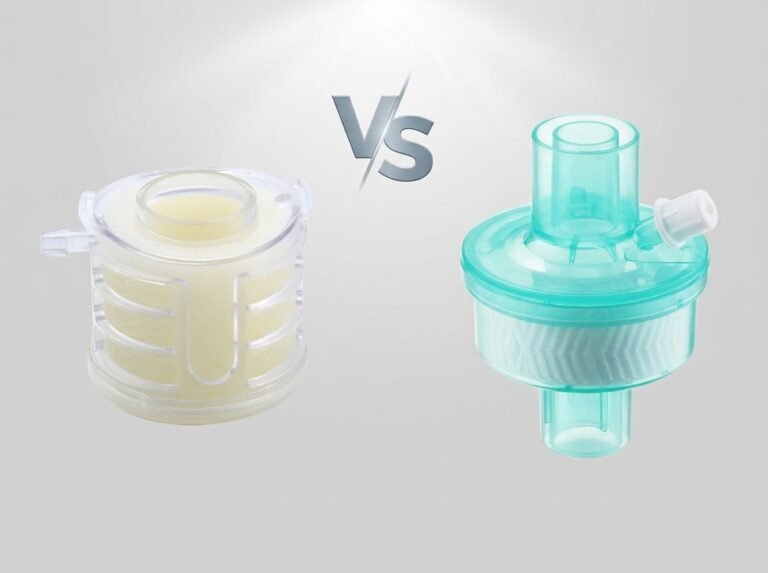
HME Filter (Heat and Moisture Exchange)
The “HME” filter yields:
- Passive humidifying effect.
- Retains heat from exhaled air.
Commonly found in short-term ventilation and for basic anesthesia. HME filters are relatively inexpensive and simple but do not provide effective infection control compared to the advanced type of filter.HMEF Filter (Heat and Moisture Exchange Filter)
HMEF Filter (Heat and Moisture Exchange Filter)
As the name suggests, the HMEF filter combines:
- Humidification
- High-efficiency bacterial and viral filtration
As a result, they are one of the most popularly used respiratory filter medical products globally in:
- ICU ventilation
- Operating rooms
- Infection-controlled environments
For many hospitals, the HMEF is a good compromise between performance, safety, and convenience, packed into a single unit.
Bacterial/Viral Filter
Focusing exclusively on filtration, as you might expect these have:
- High BFE (Bacterial Filtration Efficiency)
- High VFE (Viral Filtration Efficiency)
- No humidification function
These are frequently used when:
- External humidifying systems are already in place
- Maximum infection control is required
Electrostatic vs Mechanical Filters
One important split when it comes to selecting the right respiratory filter medical product for your use is the technology used for filtration.
Electrostatic Filters
- Lower airflow resistance
- Lightweight
- May see performance deteriorate if exposing to humidity and moisture
Mechanical Filters
- More stable, consistent performance
- More resistance to moisture
- Slightly higher airflow resistance
In ICU environments, many buyers trend towards mechanical filters based on their consistency of performance, while electrostatic products are often found where maximum low resistance is more important than absolute performance.
Important Parameters to Consider
There is more that goes into choosing respiratory filter medical products than cost and price comparisons. The specifications below are key:
Filtration efficiency
Industry expectations: BFE ≥ 99.99% VFE ≥ 99.99%
Always ask specifically for test reports, and never simply rely on the vendor’s figures from a datasheet.
Airflow Resistance
Low resistance ensures:
- Easier breathing for patients
- Better performance of highperformance ventilators
- Less workload on patient’s respiratory muscles
Especially important for:
- ICU patients
- Pediatrics
- Long term ventilation
Moisture Output (for HME/HMEF)
The moisture output is measured in mgH2O / L, tells you how effectively the airway is kept humidified and prevents drying out
Dead Space
If you manufacture breathing circuits, dead space is a very important consideration. Especially for:
- Pediatric breathing circuits
- Low tidal volume ventilation
Too much dead space results in poorer ventilation
Compatibility
Make sure:
- Standard 15mm / 22mm connectors
- Not just 15mm / 22mm, a good fit with your breathing circuits
- Seal tight
Poor compatibility is a major reason for leakage and failure of the filter to be of clinical use
Common Applications
- ICU patients needing longer term ventilator assistance where HMEF filters are beneficial
- Anesthesia where an unchanging volume of air passing through the filter is important
- Size and weight are factors in emergency and transport ventilation
Common mistakes buyers make
From the manufacturer and suppliers point of view, these are seen frequently:
- Choosing to sell HME not HMEF for ICU use
- Ignoring airflow resistance specs
- Dead space values
- Selecting only according to lowest price
- Buying filters that don’t suit the breathing circuit
These things not only result in customer complaints, but incur greater costs longer term.
What buyers want to see today
If you’re in the business of manufacturing and supplying respiratory filter medical devices, your customers will be looking to see that you can guarantee:
- Consistent standard across batches
- Proved filtration performance
- Capacity for consistent production
- Supplying OEM for components and custom designs
- Longterm source of supply
Especially since respiratory filter medical devices are likely to be in a competitive market, and will want reliable verification where performance data is concerned.
Final Notes
A neat, simple little filter, but a big role to play in aiding successful and reliable respiratory care.
The right choice in every sense protects the patient, protects breathing apparatus and reduces the chances of cross infection.
For you as a buyer, putting together a comprehensive product line such as ABI are, covering most known breathing systems, and providing components for anesthesia systems among others, an understanding of the ins-and-outs of respiratory filter medical devices is an absolute plus and essential to successfully selling your “one stop shop” to the frontline medic.
With clinical standards rising, we see a continuing trend of growth in the demand for highperformance respiratory filter medical products over the next few years at least. HMEF) filter particularly.