
Como Negociar com Fornecedores de Circuitos Respiratórios

Como Negociar com Fornecedores de Circuitos Respiratórios
When negotiating breathing circuit supplier terms, the conversation often begins with price. But in this industry, if price is where you focus, you may soon find that you’ve lost leverage.
What is a good price in breathing circuits depends on the rest of the terms accompanying the deal. The goal here is not to squeeze the supplier into providing the lowest per-unit number. The goal is to create a deal in which the quality of the circuits stays high, the pattern of supply is consistent, and both sides can stay in business without rancor.
Start with clear specifications
Would you agree on anything? In a sense, that’s what you want to do when you are negotiating. So before you begin to negotiate any term, be certain that you have a clear specification for your breathing circuit.
This means:
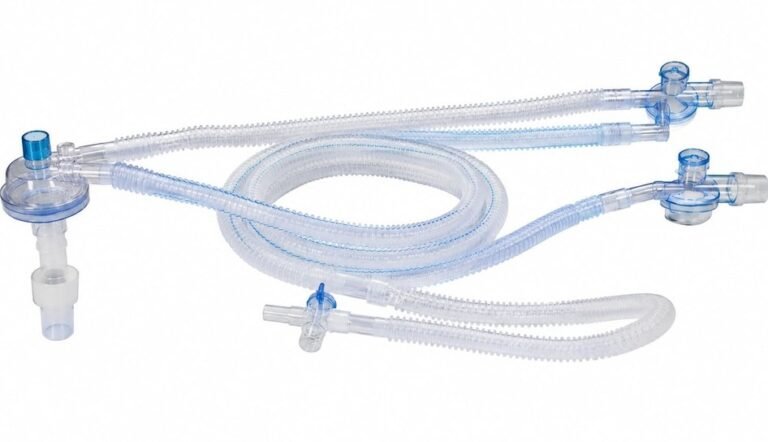
- What type of tube (corrugated or smoothbore)?
- What length and configuration of circuit?
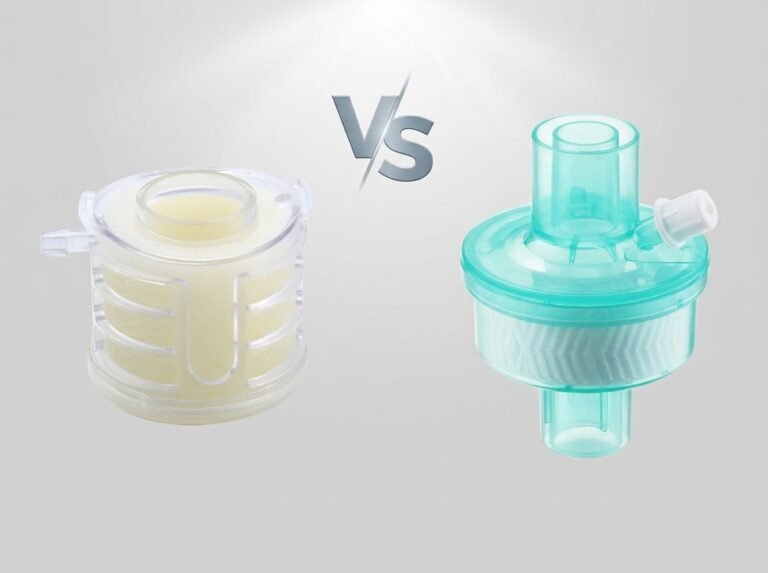
- With or without HME / HMEF filter?
- For adult, pediatric, or neonatal cases?
If these specifications are fuzzy, quotes will vary too much from one supplier to another—and all your wit is wasted in negotiation. Instead, when everything is specified clearly, you are in the driver’s seat.
Don’t start by negotiating price
Some buyers devote themselves immediately to aggressive “off” pricing talks; suppliers are wise to this, and build margin into their original quotes. The wise buyer brings to the table:
First: materials and structure
Second: quotation based on testing
Third: quotes from multiple suppliers
Only after this thorough work and its resulting clarity has been achieved should the buyer broach price. Otherwise, a low price may result in a low-quality product.
Understand what drives the cost
If you drive the price down, you had best know what has driven the price in that way.
Most important cost factors:
- Raw material character (PVC, EVA)
- Type of tube, thickness, etc.
- Presence of HME or HMEF filters
- Packaging
- MOQ (minimum order quantity)
Once you know this, you can negotiate better—not simply ‘give me a lower price’ but rather, ‘lower the price because we’re changing the specs slightly’.
Use your volume as leverage
Suppliers are more flexible when they see a long-term prospect.
Instead of saying:
“Just offer me a lower price”…
…try:
- Discuss forecast volume
- Point out you’ll do a repeat order in 3 months
- Ask for tiered pricing possibilities
Shift the negotiation from a one-time deal (which most suppliers resent) into a long-term deal (which most suppliers relish).
Negotiate far more than the price
Savvy buyers don’t just negotiate price. They negotiate terms too.
Key areas are:
- Lead time
- Payment terms
- MOQ flexibility
- Packaging specifics
- After-sales support
Sometimes improving these saves more than a mere 5% on price.
Test their foot in the door with tiny variations
When in the negotiation process with a supplier I will request slight variations:
- Slight alteration in the packaging
- Slightly different configuration
- Also: request for sample alterations of some type
A good manufacturer will respond quickly and positively. A poor supplier will stall or decline the request. And you know you’ll have trouble when you team up.
Watch closely how they respond to technical questions
Negotiation is not merely a simple matter of numbers. It’s also an issue of knowledge. Have they studied the domain thoroughly?
Possible questions you should ask are:
- How do you perform leak testing?
- Do you use a straight connector bond or angled?
- How do you establish batch consistency?
Someone who knows his stuff will answer your question bluntly. And if his answer is evasive, simply following a price drop will do little to sort out future issues.
Be wary of an agreeable supplier of unbelievably low-priced quotes
If a supplier flatly agrees to your much lower demand for half the previous cost, you have to take that as a given! You have underestimated your career predictor and will pay dearly later.
Potential negatives:
- Downgrade of materials
- Lax quality assurance methods in-house
- Inconsistent cleanliness procedures during production
In breathing circuits, these problems will often surface “after the horse has bolted”.
Build the long-term position
By far the most fruitful negotiating will take place when you project a long-term partnership approach.
How can you accomplish this?
- By sending realistic forecasts of orders
- Not “going crazy” on the odd email each month…eyes on the far-off trade show in China, though consistent.
- Paying in a timely manner (often a huge issue in low-cost sourcing).
A supplier simply responds to someone they have confidence will continue placing orders with them.
Once you have established that position, you are paid up on this high bargain-basement price for the next 10 years, and will find it’s amazing what you can save in other ways.
Common mistakes
Exceedingly common are the following habits:
- Negotiating before ascertaining which techniques are to be used; and going ahead “move for move” basically
- Using a link for price comparison, and neglecting to match specifications and related issues
- Ignoring manufacturers who actually have a set of specific quality and testing standards
- Swapping them all out every 6 months to save 5% on price at each guy
These will all lead to strife, not savings.
Last thought
To negotiate breathing circuit supplier terms to your advantage, all must sink-or-swim on the price of all the components, but the thing to realize is there is trouble everywhere. A good negotiation is a cost effective one, and also a risk-reducing one!
Approach your suppliers well and with expectation, and you’ll find you won’t have to deal with so many people, or settle for bad behavior, and a firm relationship will go easier to manage through the years of growth.
Shipping costs and tariffs vary significantly by region. At Weishan Tech, we offer flexible Incoterms (FOB, CIF, DDP) and optimize packaging to reduce shipping volume for distributors in North America, the EU, and Southeast Asia, helping lower total landed costs.
Yes. Operating from our medical manufacturing base in China, Weishan Tech features a 1,600m² cleanroom and an expert technical team. We regular customize lengths, configurations, and connectors compliant with ISO 5356-1 to meet the precise regulatory requirements of different global markets.
When importing to markets like the US and Europe, compliance is critical. Buyers must verify that the Chinese manufacturer holds valid ISO 13485 certification, CE marking, or FDA clearance, ensuring the breathing circuits meet regional medical safety standards.