
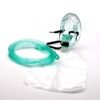
Oxygen Mask With Reservoir Bag
Oxygen Mask With Reservoir Bag
1. Product Overview
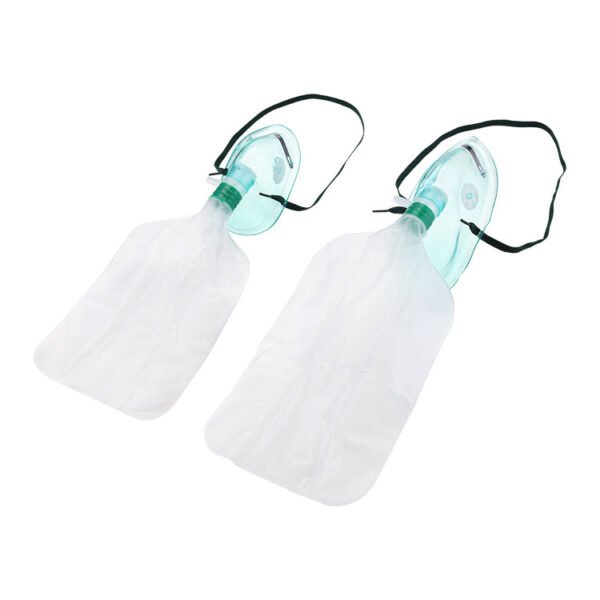
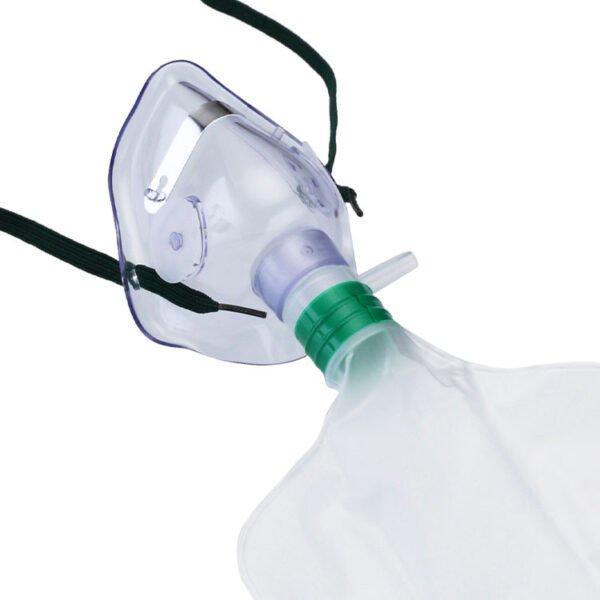
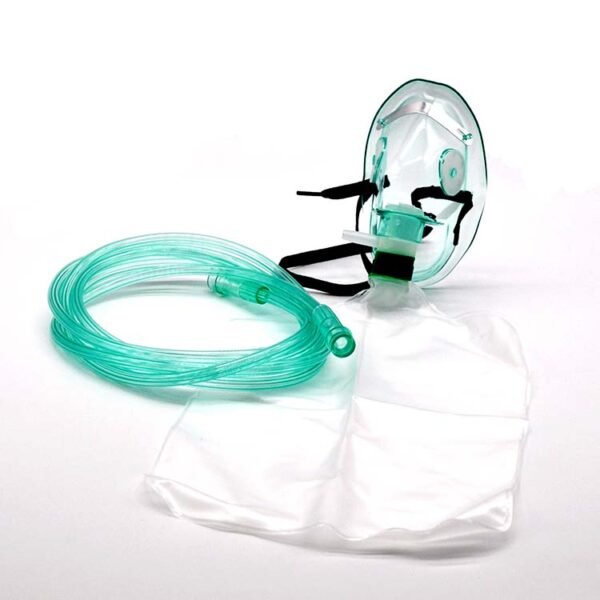
The oxygen nonrebreather mask is a single-patient-use respiratory device engineered to deliver high concentrations of supplemental oxygen — typically 60–90% FiO2 — to patients in emergency, critical care, and pre-hospital settings. Unlike simple oxygen masks or nasal cannulas, a non-rebreathing mask uses a reservoir bag and a system of one-way valves to prevent the patient from re-inhaling exhaled carbon dioxide, ensuring each breath draws from a fresh, oxygen-rich supply.
Clinically, this device is a first-line tool for:
- Acute respiratory distress and hypoxemia
- Trauma and emergency resuscitation (ambulance, ER, disaster response)
- CO poisoning management
- Peri-operative and post-anesthesia oxygen support
- ICU and step-down unit patients requiring high-flow oxygen without mechanical ventilation
For medical distributors and hospital procurement teams, the nonrebreather mask is not a niche accessory — it is a core, recurring-demand SKU. It sits in the same essential category as gloves, syringes, and IV sets: consumed in high volume, required in every emergency department, ambulance, ICU, and field hospital, and mandated by clinical protocols worldwide. Distributors who stock a reliable, compliant, and competitively priced 100 nonrebreather (case-pack) offering secure a steady, repeatable revenue line rather than a one-time sale.
2. Core Technical Specifications
| Specification | Standard Detail |
| Product Type | Oxygen mask with reservoir bag (non-rebreathing mask / NRB mask) |
| Material | Medical-grade PVC; DEHP-free formulations available on request |
| Mask Body | Soft, contoured, transparent PVC for facial conformity and patient monitoring |
| Reservoir Bag Capacity | 1000ml standard (600ml pediatric option available) |
| Valve System | One-way exhalation valve(s) + reservoir check valve to prevent rebreathing and room-air entrainment |
| Oxygen Concentration Delivered | Up to 60–90% FiO2 at 10–15 L/min flow |
| Tubing | 2m (approx. 7ft) anti-crush, kink-resistant oxygen supply tubing |
| Connector | Universal 22mm connector, compatible with standard oxygen flow meters |
| Fit & Retention | Adjustable aluminum nose clip; soft elastic head strap for secure, comfortable fit |
| Sizing | Adult, Pediatric, and Infant sizes available |
| Sterility | Non-sterile or EO-sterilized options |
| Packaging | Individual poly bag; bulk carton packaging configurable (e.g., 50/100/200 per case) |
| Shelf Life | Typically 3–5 years from manufacture, material-dependent |
| Regulatory Marks | CE marked, ISO 13485-manufactured, FDA-listed (device dependent) |
Why these specs matter to buyers: The reservoir bag’s 1000ml capacity is what enables true 100 nonrebreather performance — a full reservoir of oxygen ready to be drawn on each inhalation, which is the defining functional difference between a nonrebreather and a simple oxygen mask. The one-way valve system is the second critical differentiator, physically preventing exhaled CO2 from mixing back into the reservoir.
3. Key Benefits for Medical Distributors
Regulatory Compliance, Built In
- ISO 13485quality management systems govern manufacturing
- CE markedfor European market access
- FDA-listeddevice options for U.S. and North American distribution
- Full technical files and DHF documentation available to support tender submissions and hospital procurement audits
Packaging & Logistics Built for Distribution
- Bulk shipping configurations (carton, pallet) optimized for container efficiency and reduced freight cost per unit
- Individual poly-bag packaging for hospital point-of-use dispensing
- Sterile (EO) and non-sterile packaging lines available to meet varying regional tender requirements
- Consistent carton dimensions and weights to simplify warehouse planning and reorder cycles
Demand Stability & Margin
- Classified as a consumable, single-use critical care item — repeat, recurring order cycles rather than one-off capital purchases
- Steady baseline demand from EMS, hospitals, and government stockpile/PPE reserve programs
- Attractive landed cost structure when sourced at scale (e.g., 100 nonrebreather case packs), supporting healthy distributor margins even in competitive tender environments
- Stable, redundant supply chain with consistent raw material sourcing (medical-grade PVC) reduces the risk of stockouts that damage distributor-hospital relationships
Clinical Safety & Patient Comfort
- Soft, contoured mask body reduces pressure points and improves patient tolerance during extended use
- Anti-crush tubing maintains reliable oxygen flow even under field, transport, or bedside movement conditions
- Secure but adjustable strap and nose clip reduce mask slippage, minimizing nursing intervention and patient complaints
- Reliable one-way valve function reduces risk of CO2 rebreathing complications — a key safety metric hospital risk and quality committees evaluate during vendor selection
4. FAQ
Q1: What is the difference between a standard oxygen mask and a 100 nonrebreather mask?
A standard (simple) oxygen mask delivers oxygen at lower concentrations, typically 35–50% FiO2, and allows some mixing with ambient room air because it has no reservoir or valve system. A 100 nonrebreather mask adds a 1000ml reservoir bag plus one-way valves: the reservoir stores oxygen between breaths, and the valves stop exhaled air from re-entering that reservoir while also limiting room air intake. The result is a much higher deliverable oxygen concentration — up to 90% FiO2 — making the nonrebreather the preferred choice for acute hypoxemia, trauma, and emergency response, whereas a standard mask is reserved for patients with lower oxygen requirements.
Q2: How does the reservoir bag function on a non-rebreathing mask to deliver high concentrations of oxygen?
The reservoir bag on a non-rebreathing mask acts as an oxygen storage buffer. Oxygen flows continuously from the source into the bag, filling it between the patient’s breaths. When the patient inhales, oxygen is drawn primarily from this pre-filled reservoir rather than diluted room air. On exhalation, one-way valves on the mask’s sides vent exhaled gas out of the mask rather than back into the reservoir, while a check valve between the bag and mask prevents exhaled CO2 from re-entering the bag. This closed-loop mechanism is what allows the device to sustain high FiO2 delivery (60–90%) across successive breaths.
Q3: Are Weishan Tech’s oxygen nonrebreather masks compatible with standard hospital flow meters and DEHP-free?
Yes. Weishan Tech’s oxygen nonrebreather masks use a universal 22mm connector and standard tubing interface, making them compatible with virtually all standard hospital and EMS oxygen flow meters and regulators without adapters. DEHP-free medical-grade PVC formulations are available for institutions and regions with plasticizer restrictions, alongside standard PVC options — allowing distributors to match specific tender or hospital procurement specifications without requiring a separate product line.
1-300x300.jpg "PVC anesthesia mask (valve horizontal)1")