
Anesthesia Circuit with Smoothbore Tubing
Anesthesia Circuit with Smoothbore Tubing
Low-Resistance Breathing System for Surgical Ventilation
Product Overview
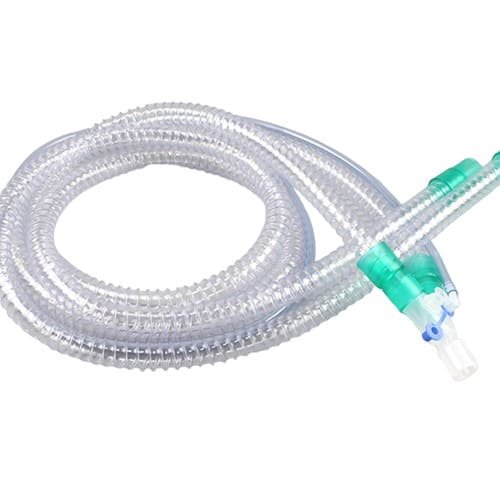
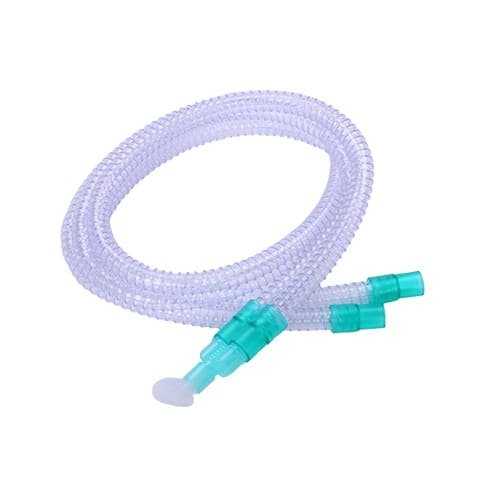
In modern surgical ventilation, the internal geometry of a breathing circuit directly impacts gas delivery efficiency, monitoring accuracy, and patient respiratory effort. The Anesthesia Circuit with Smoothbore Tubing addresses these challenges through a fundamentally different approach to tube construction: a completely smooth inner wall that transforms how gases move through the circuit.
Key Technical Specifications
| Parameter | Specification |
| Inner Wall Profile | Smoothbore — continuous smooth surface, zero corrugation |
| Airflow Resistance | ≤ 0.2 kPa at 30 L/min (significantly below corrugated equivalents) |
| Circuit Compliance | Low compliance design — minimizes volume loss in tubing |
| Tube Material | Medical-grade PVC (hoses) + Polypropylene (connectors) |
| Connector Interface | 15 mm / 22 mm conical per ISO 5356-1:2015 |
| Tube Lengths Available | 1.2 m • 1.6 m • 1.8 m • 2.4 m |
| Patient Population | Adult and Pediatric configurations |
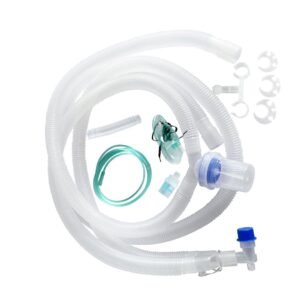
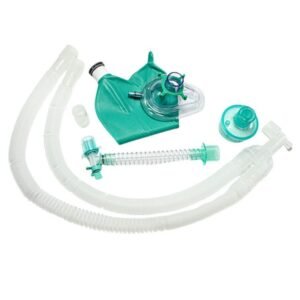
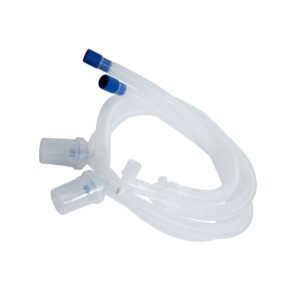
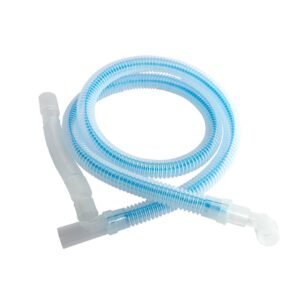
| Included Components | 2× smoothbore hoses, 1× swivel elbow (luer-lock port + cap), 1× Y-piece |
Key Benefits for Medical Distributors
1. Streamlined Regulatory Market Access
With concurrent FDA 510(k) clearance and CE marking under MDR, distributors can address North American and European markets with a single SKU family. The underlying ISO 13485 quality system certification further simplifies qualification in markets that reference international quality standards, such as Australia (TGA), Canada (Health Canada), and Japan (PMDA).
Frequently Asked Questions (FAQ)
Q: What is the measured airflow resistance of this circuit compared to corrugated alternatives?
A: This smoothbore circuit achieves ≤0.2 kPa airflow resistance at standard adult ventilation flow rates. Comparable corrugated circuits typically measure 0.3–0.5 kPa under the same conditions. The reduction comes from eliminating the turbulence zones created by corrugation ridges, allowing more laminar gas flow throughout the circuit length.