
How to Select High-Performance Breathing Filters

A Professional GuideBreathing filters serve a key function in respiratory therapy and protection, acting as the protective “barriers” against environmental pollutants entering our respiratory systems. No matter whether it is clinical anesthesia, ICU care or home oxygen therapy – selecting an adequate filter is vital in order to avoid cross-contamination and ensure patient safety1.1. Filtration Technology: Mechanical Vs Electrostatic
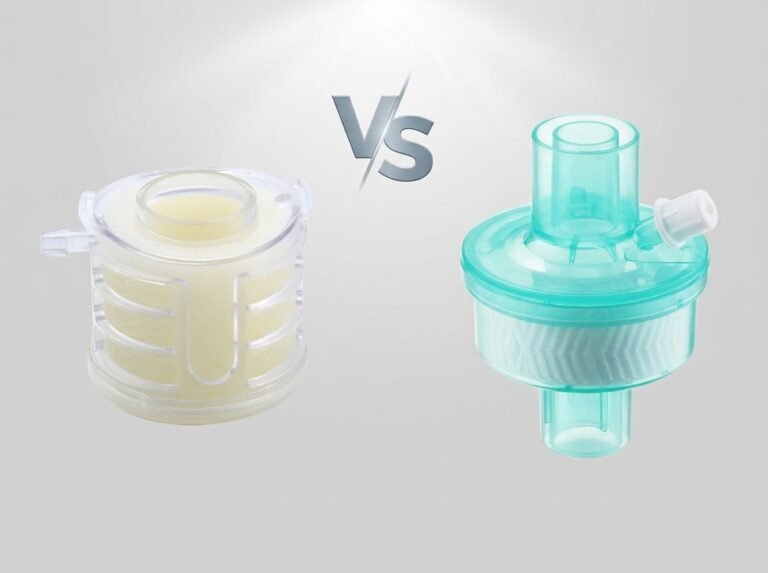
When choosing a filter, understanding its working principle is of primary importance: mecanique filters utilise dense glass fiber membranes that offer exceptionally high filtration efficiencies (typically >99.99%): these offer exceptional water filtration efficiency at competitive costs (reference). Electrostatic Filters: Electrostatic filters use charged fibers to capture particles. Their performance remains reliable even under high humidity environments, making them the gold standard in high risk surgical settings. Provide lower breathing resistance and are cost-effective solutions, making them a suitable option for long-term home oxygen therapy or general ward use.2. Key Performance Indicators (KPIs)When purchasing products, always verify these three technical specifications:Filtration Efficiency (BFE/VFE): High-quality filters should have a bacterial filter efficiency rate (BFE) and viral filter efficiency rate (VFE) rating of at least 99.9% for filter efficiency purposes; dead space reduction reduces CO_2 rebreathing risk significantly which is especially helpful for patients with compromised lung function; finally respiratory resistance should decrease due to less effort required to breathe and vice versa! Check for products with low pressure drops when operating at 30 L/min3.
HME (Heat and Moisture Exchange) RequirementsPentru patients living in dry environments, we advise purchasing a filter equipped with HME capabilities. These “artificial noses” simulate human nasal functions by retaining heat and moisture from exhaled air, helping prevent airway dehydration and discomfort. Expert Tip: Breathing filters should be changed every 24 hours for maximum protection and hygiene reasons or sooner should visible soiling occur.